SaaS, AI Training, Microlearning
Voice Ops: The Science of Smarter Call-Center Training
An AI-assisted coaching tool for call centers. It transcribes and tags every call, queues bite-sized coaching for trainers, and uses microlearning and color science to move average reps toward high performance.
 Voice Ops

- 01 Problem
Call-center customers needed to push the middle of the pack toward their high-performing reps, but coaches were spread thin, supervisors couldn't find good calls to coach, and agents didn't know which coaching to act on.
- 02 Approach
Interviews and observation, three proto personas, empathy mapping and a year-long journey study shaped a three-click coaching flow built on AI-tagged, color-coded call transcripts and microlearning.
- 03 Outcome
A coaching workflow that turns raw call volume into targeted, bite-sized training: discovery, confirmation and coaching in one place, with AAA-contrast highlights and a transcript bar for long calls.

Interactive prototype
Open full screen in Figma ↗Use the arrows under the prototype to step through all 15 screens, or open it full screen in Figma.
Selected screens

Project summary
Voice Ops is a San Francisco startup, backed by several financing rounds, whose software and service act as an AI-assisted training tool for call-center associates and trainers. (Voice Ops is now Frontline AI.)
The technology listens to calls completed by associates and converts them to text, which is sorted into tags by training category. Trainers on the floor are then queued with coaching opportunities for individual associates and teams, and teams can compete against each other in educational challenges.
"Call center floors can be described as crazy-busy. We almost never have the time we need to train staff the way we want to, so we are always looking for better, faster ways to help improve our team's skills." Voice Ops customer, HomeLight
The customer problem
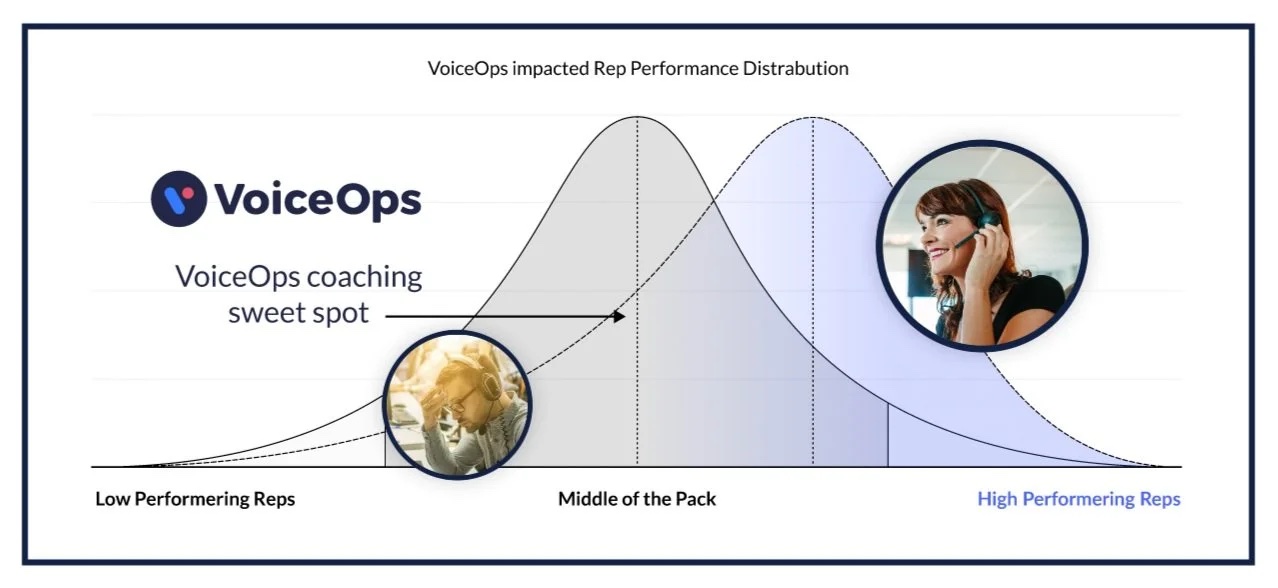
Voice Ops customers need to move the middle of the pack of their sales reps toward the high performers on the distribution curve. Low performers are weeded out. The opportunity is the large group in the middle.
Voice Ops tags reps' calls live with its AI and call transcription models. Floor trainers can find and queue coaching from a tablet or computer, and assign reps short training sessions.
The science: microlearning
Short, focused learning sessions work better than long classes because they leave room for learning to settle between sessions. They reduce mental fatigue, which raises engagement and improves knowledge retention, and they give people time to process and consolidate what they learned. One 2018 study reported an 18% improvement in knowledge retention among students taught with microlearning principles.
Research
- Qualitative interviews and observation
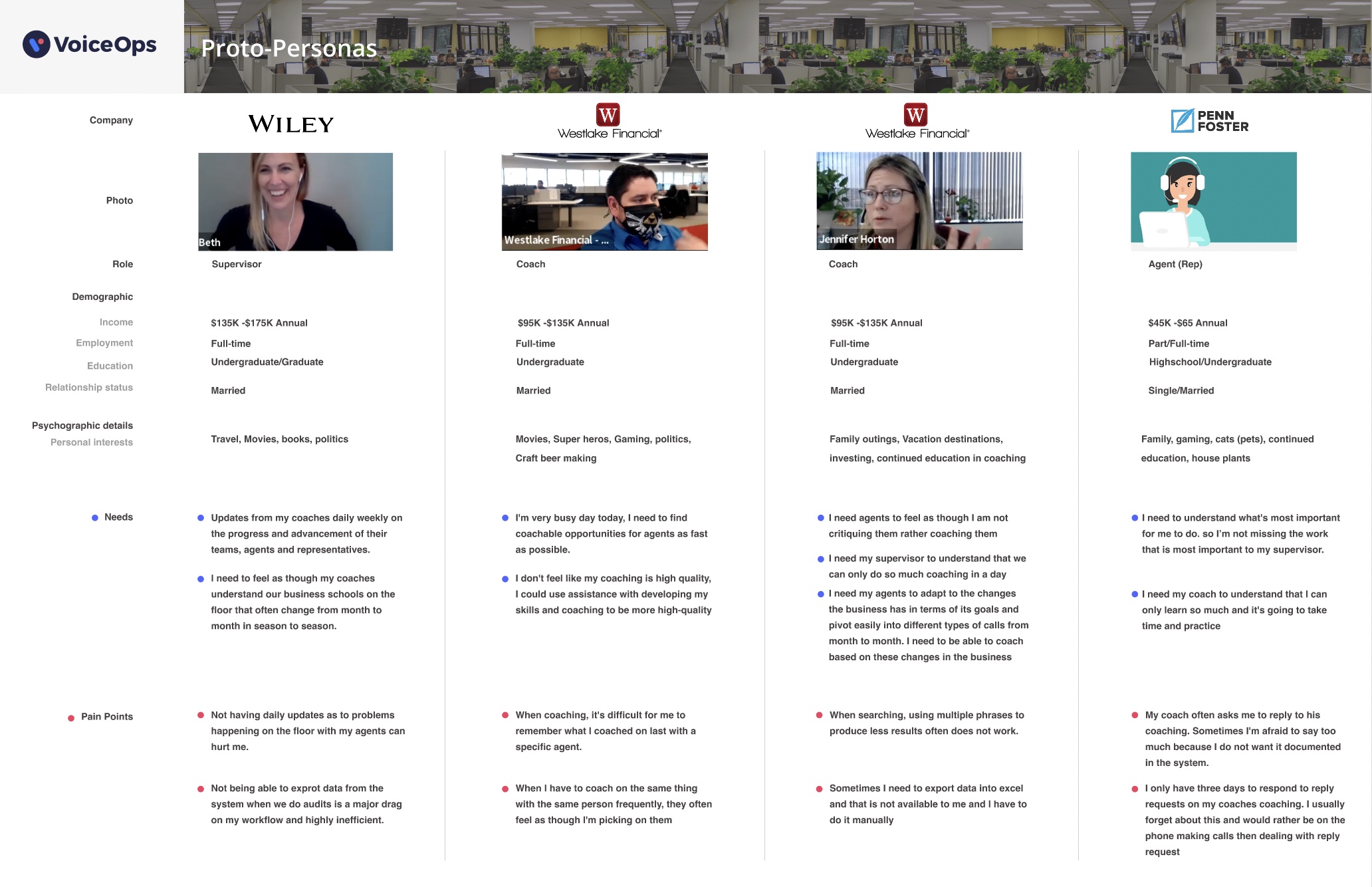
- Proto personas: the Supervisor, the Coach and the Agent
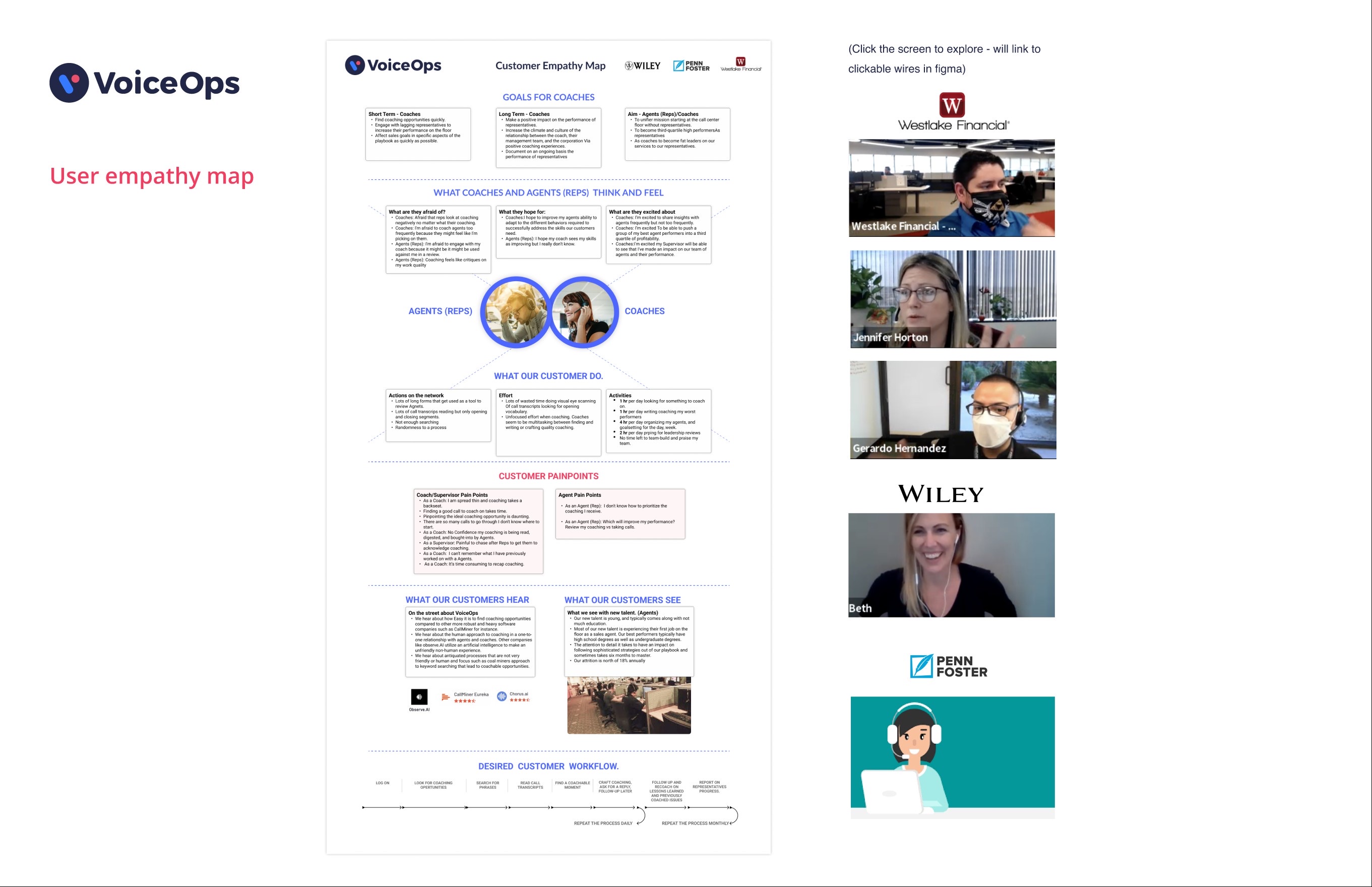
- Empathy mapping
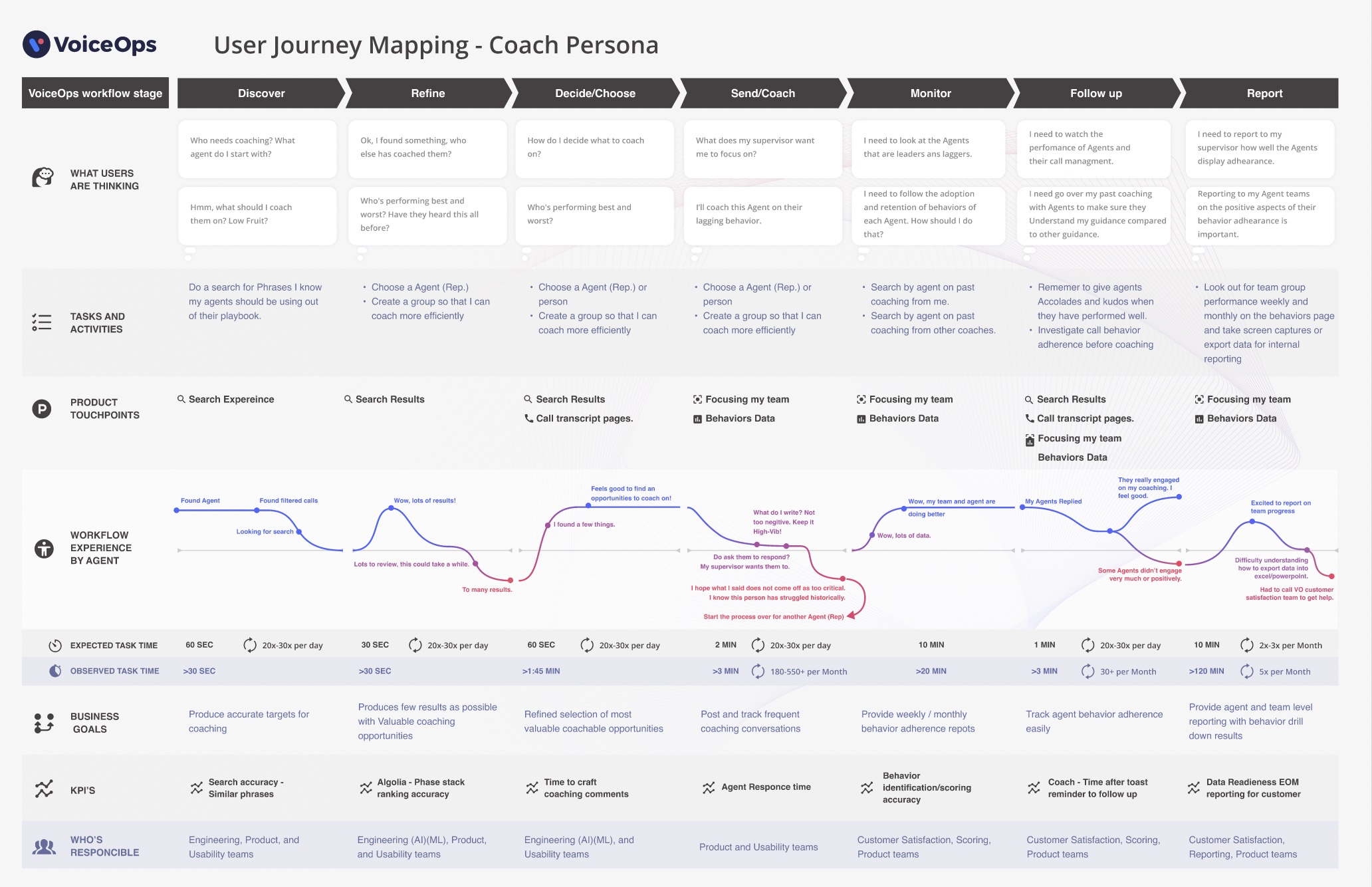
- Journey mapping
- A high-level workflow, including the anatomy of the transcript bar
Proto personas were created within a few days of the customer interviews to confirm hypotheses and replace older marketing personas. The journey map of the coach persona was updated in a longitudinal study over one year.
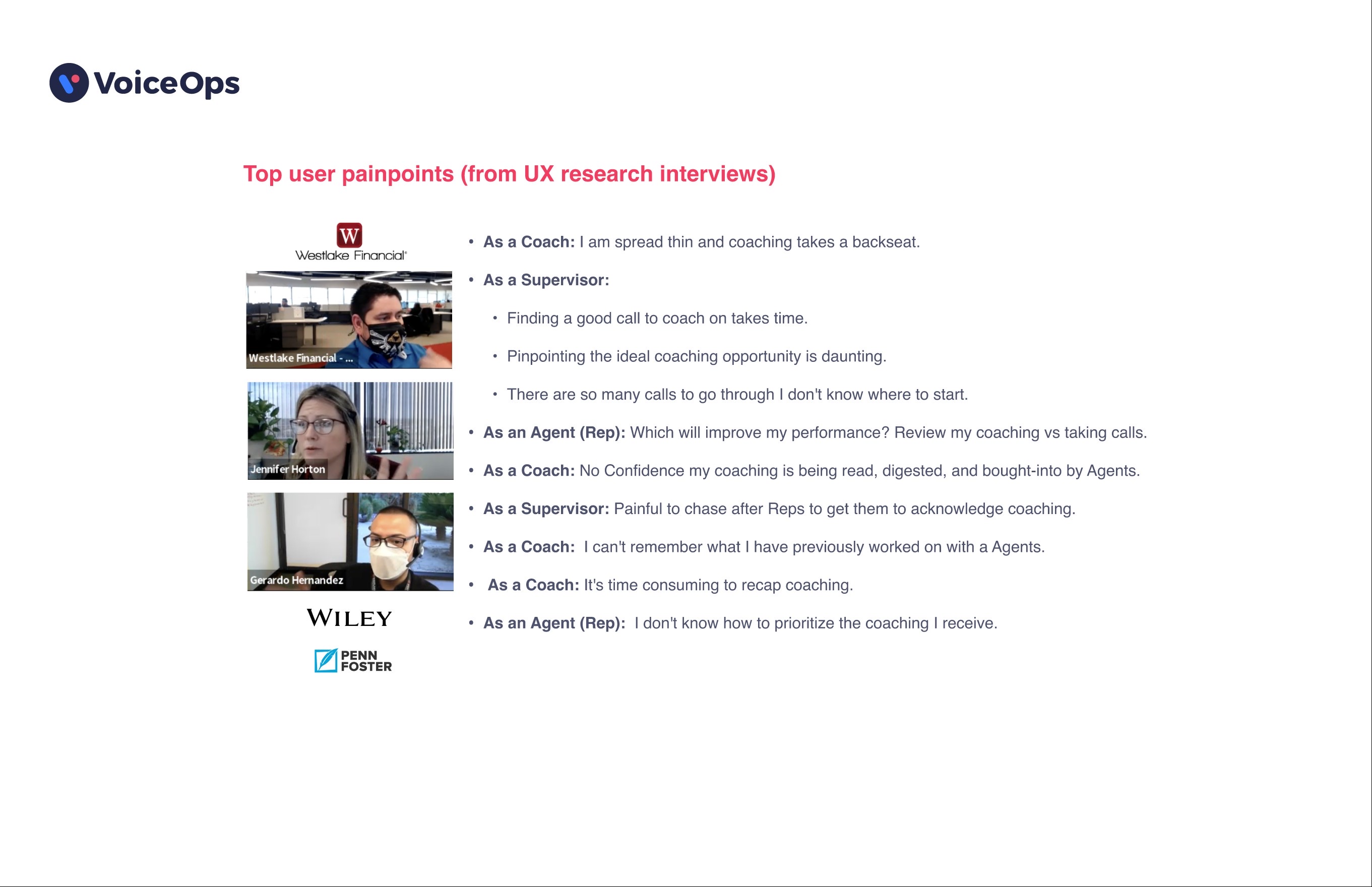
Findings: user pain points
- Coach: "I'm spread thin, and coaching takes a backseat."
- Supervisor: "Finding a good call to coach takes time. Pinpointing the ideal coaching opportunity is daunting. There are so many calls, I don't know where to start."
- Agent: "Which will improve my performance more, reviewing my coaching or taking calls?"
- Coach: "I have no confidence that my coaching is being read, digested and bought into by agents."
- Supervisor: "It's painful to chase reps to get them to acknowledge coaching."
- Coach: "I can't remember what I've worked on with each agent before, and recapping coaching takes time."
- Agent: "I don't know how to prioritize the coaching I receive."
The science: color association
Brain activity patterns are specific to colors. Studies using MEG recordings have shown that the brain produces distinct activity for different colors, enough for researchers to predict which color a person is seeing. Color-coding information in microlearning could create distinct neural patterns that help recall.
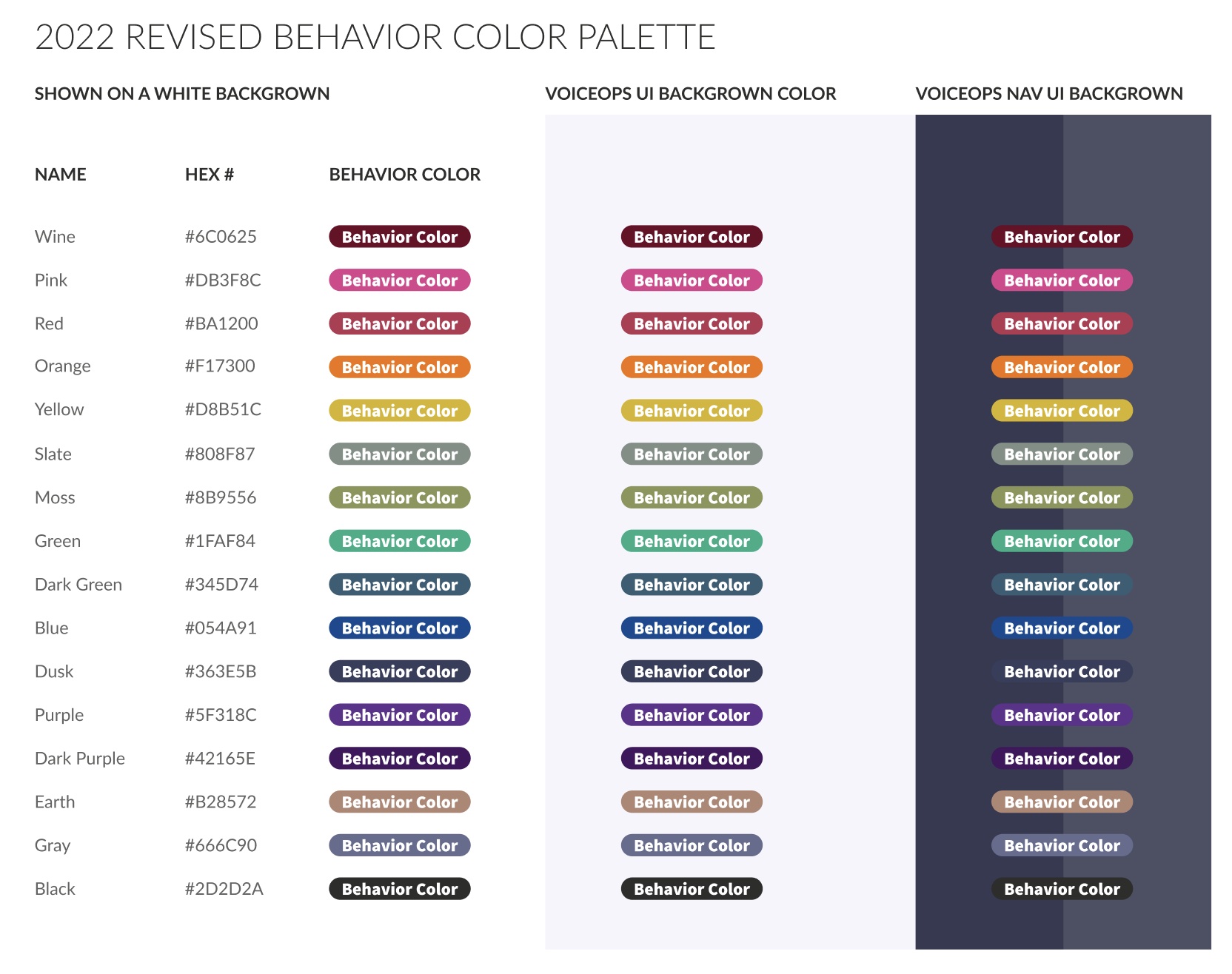
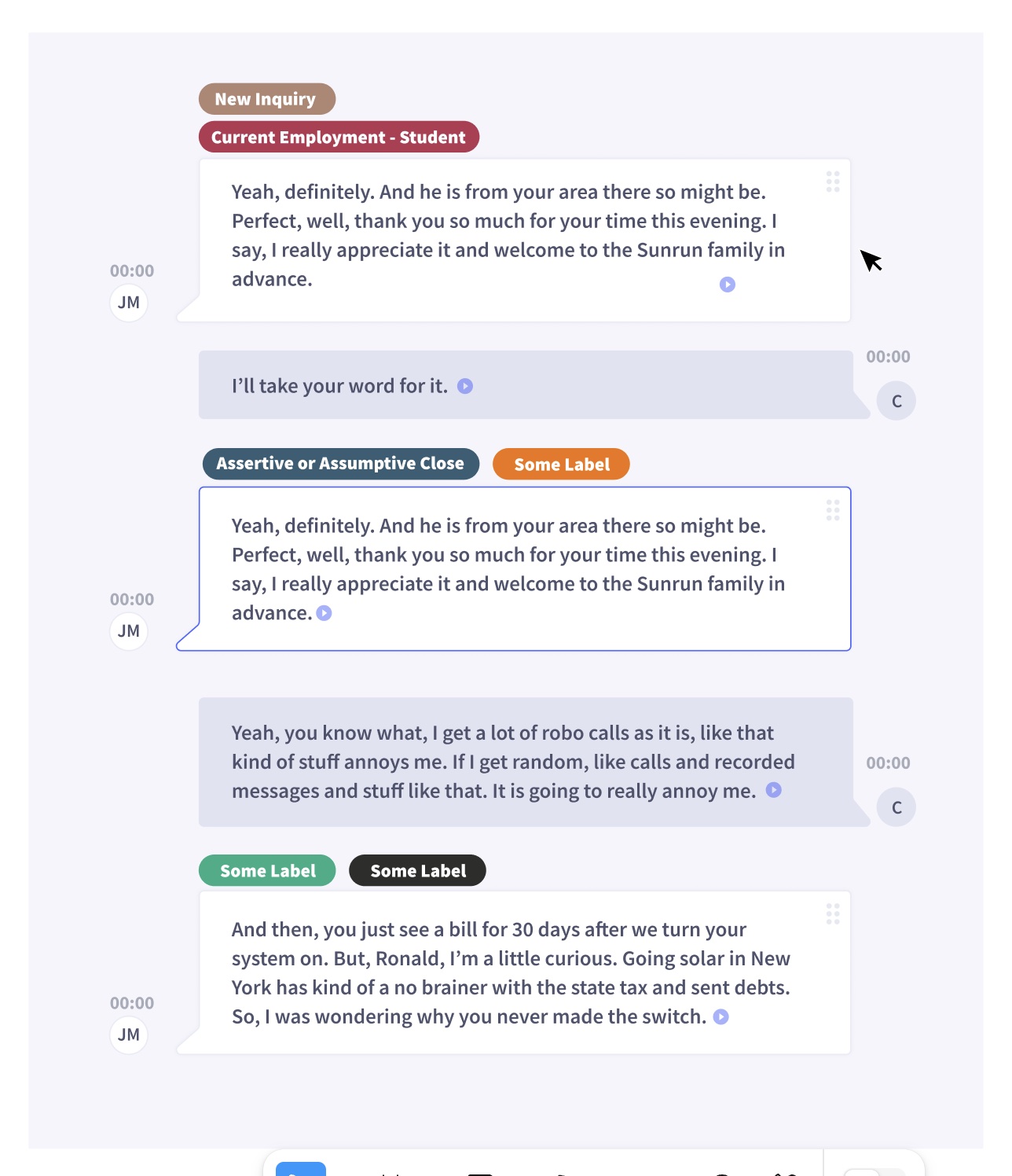
Voice Ops tags behaviors in every transcript, such as asking for the sale, a buy-in question, an objection about pricing or needing to talk with a spouse, an expression of urgency, or putting the customer on hold. The behaviors differ by company and industry. Each one has its own color, so a coach can scan a long transcript and see the pattern of a call at a glance.
"VoiceOps is very simple yet efficient in breaking down and analyzing calls, especially compared to a lot of the call monitoring software that I have had experience with." Voice Ops customer, HomeLight
The solution
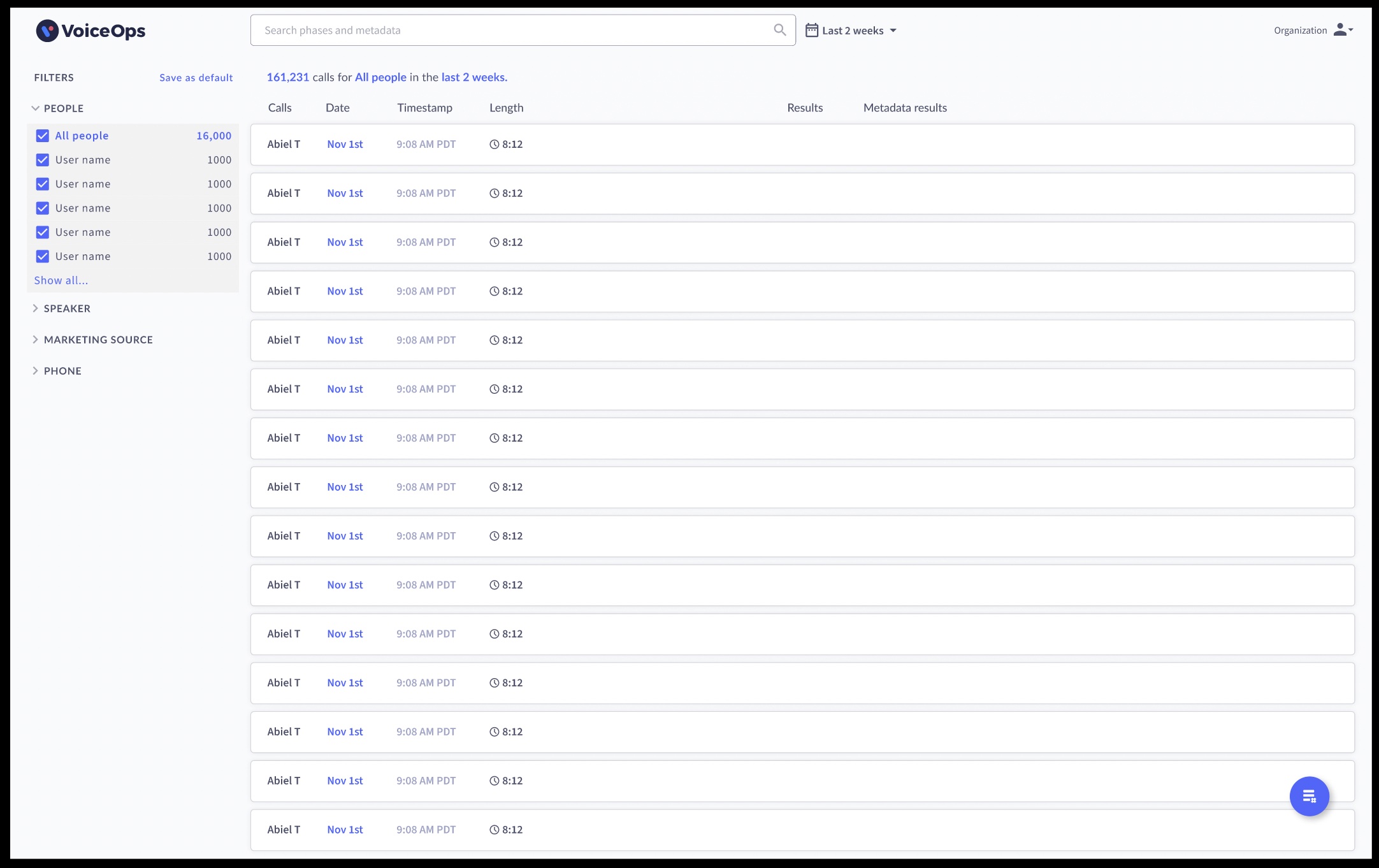
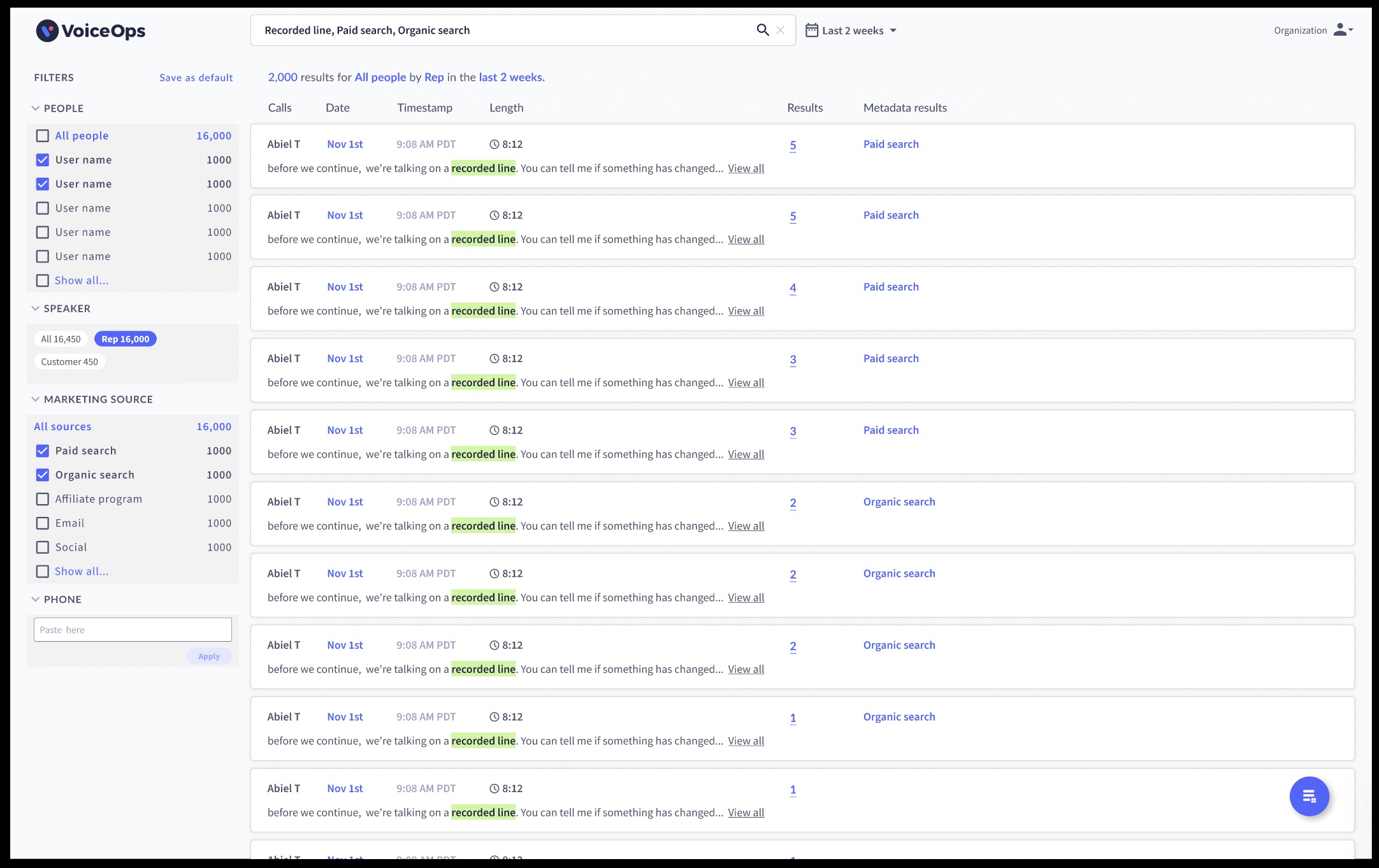
Finding calls to coach. The left menu sets the market source to train against and the behaviors the system should look for inside calls. It's a three-click flow, and the system returns a list of matching calls.
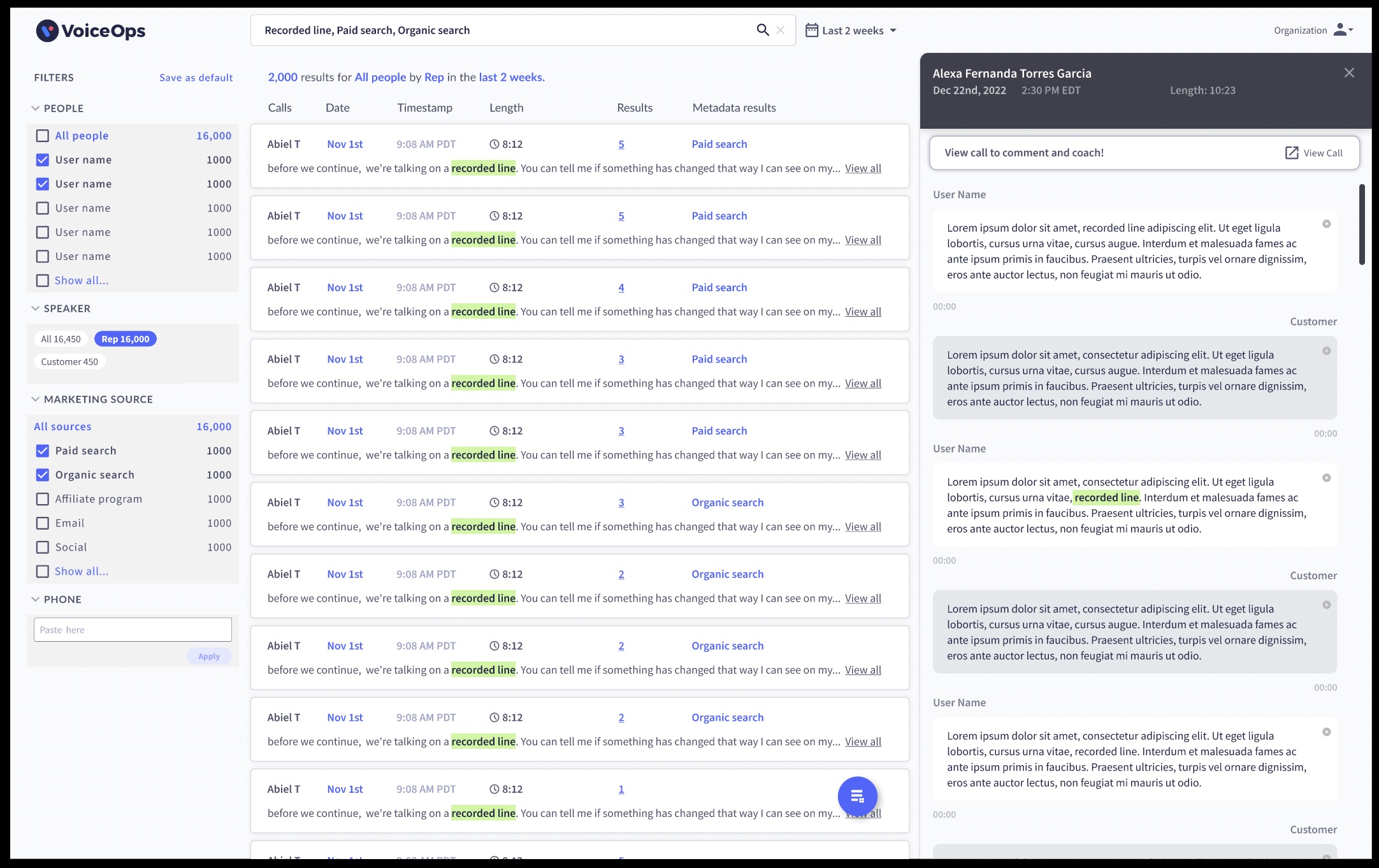
Assigning coaching. When a trainer selects a call, a comment panel opens with existing and past comments to work from. Comments are attached to the call, which assigns the coaching.
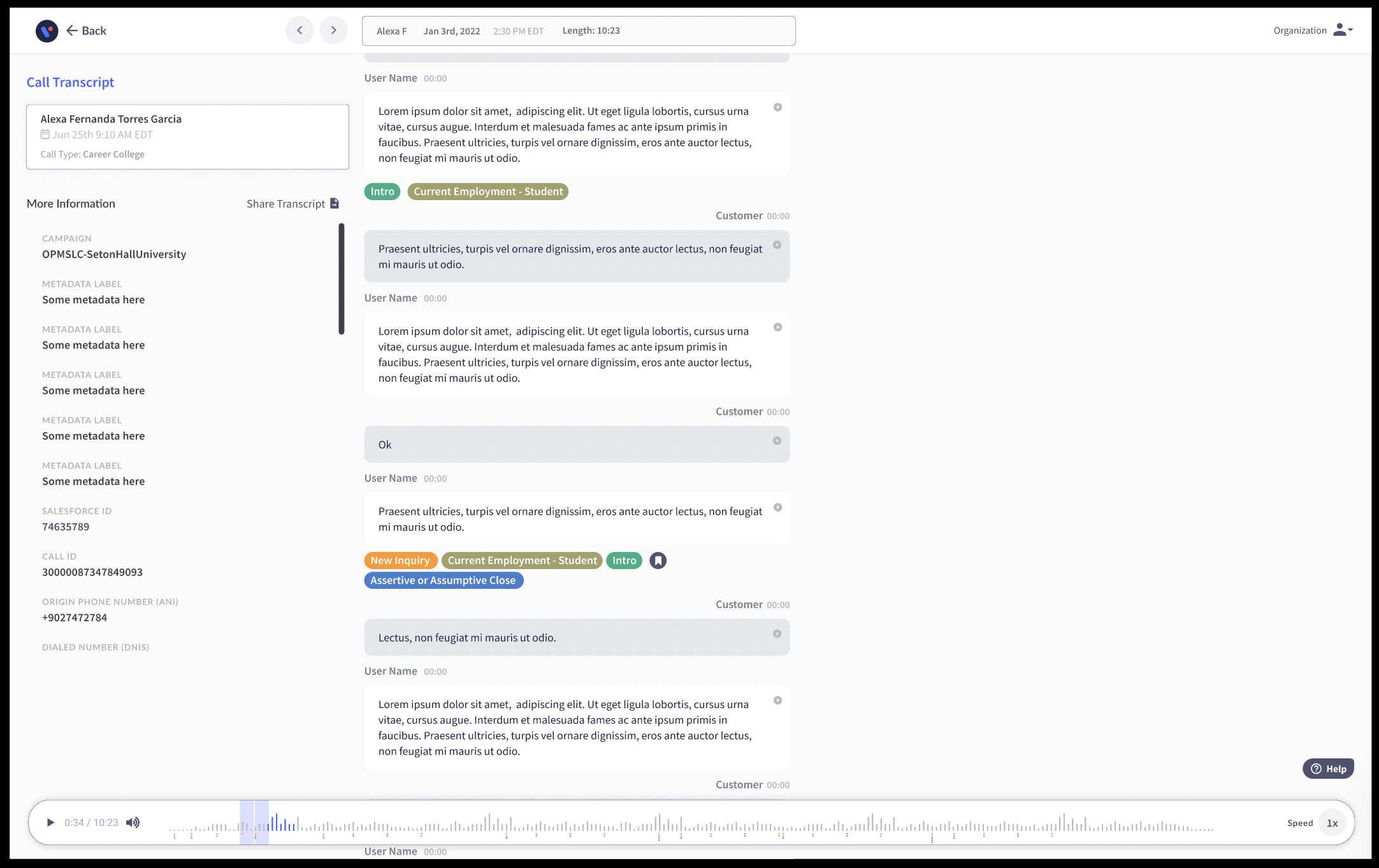
Viewing and listening to calls. View Call shows the transcript in context with all of its color-tagged behaviors, plus the call metadata, so the trainer can see who the call was with and share it with other trainers.
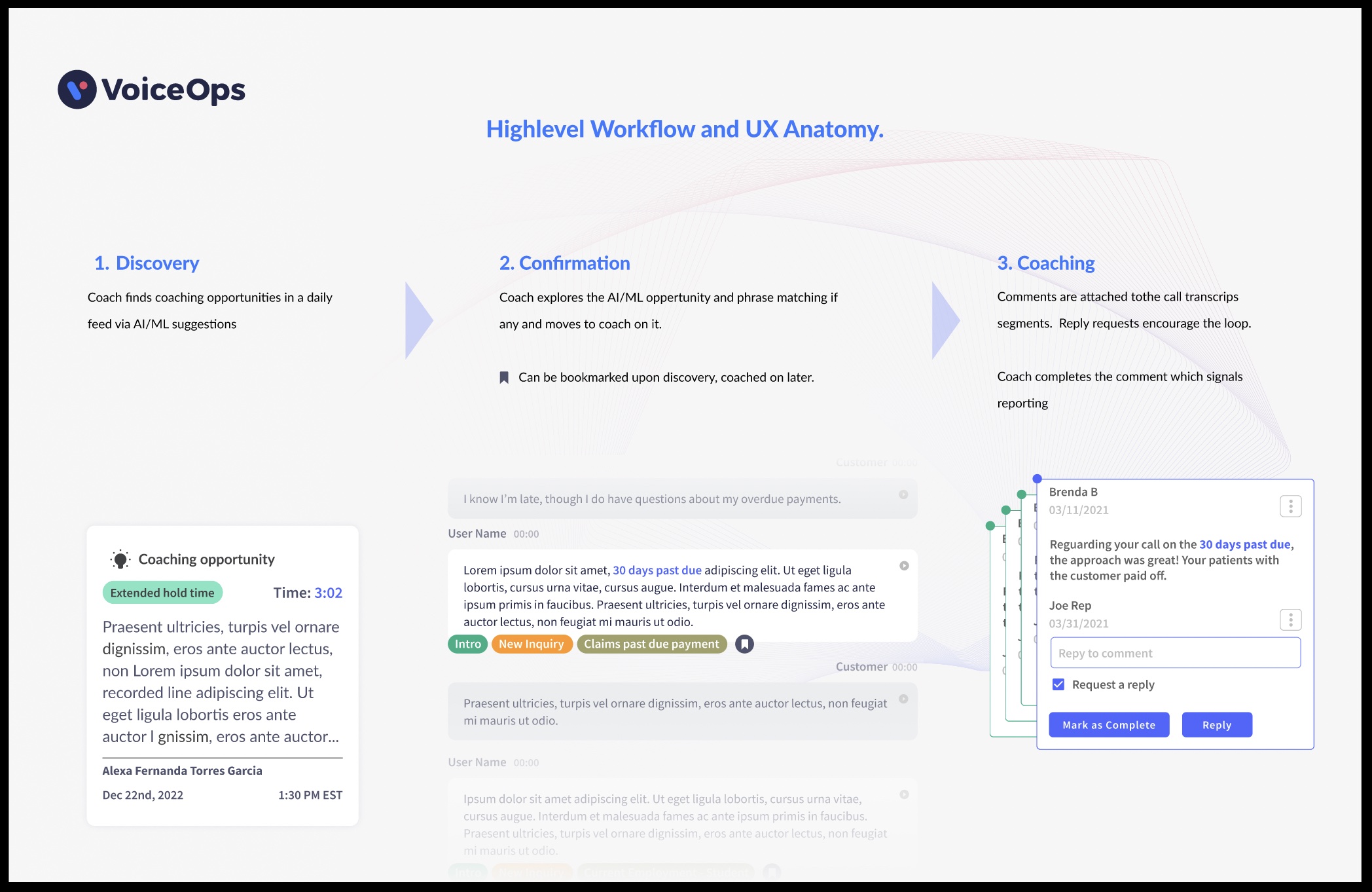
Three phases of work. Discovery: the trainer searches for people and calls to coach with the right focus. Confirmation: the trainer confirms the call is worth coaching against. Coaching: the trainer applies microlearning lessons and assigns them to the agent.
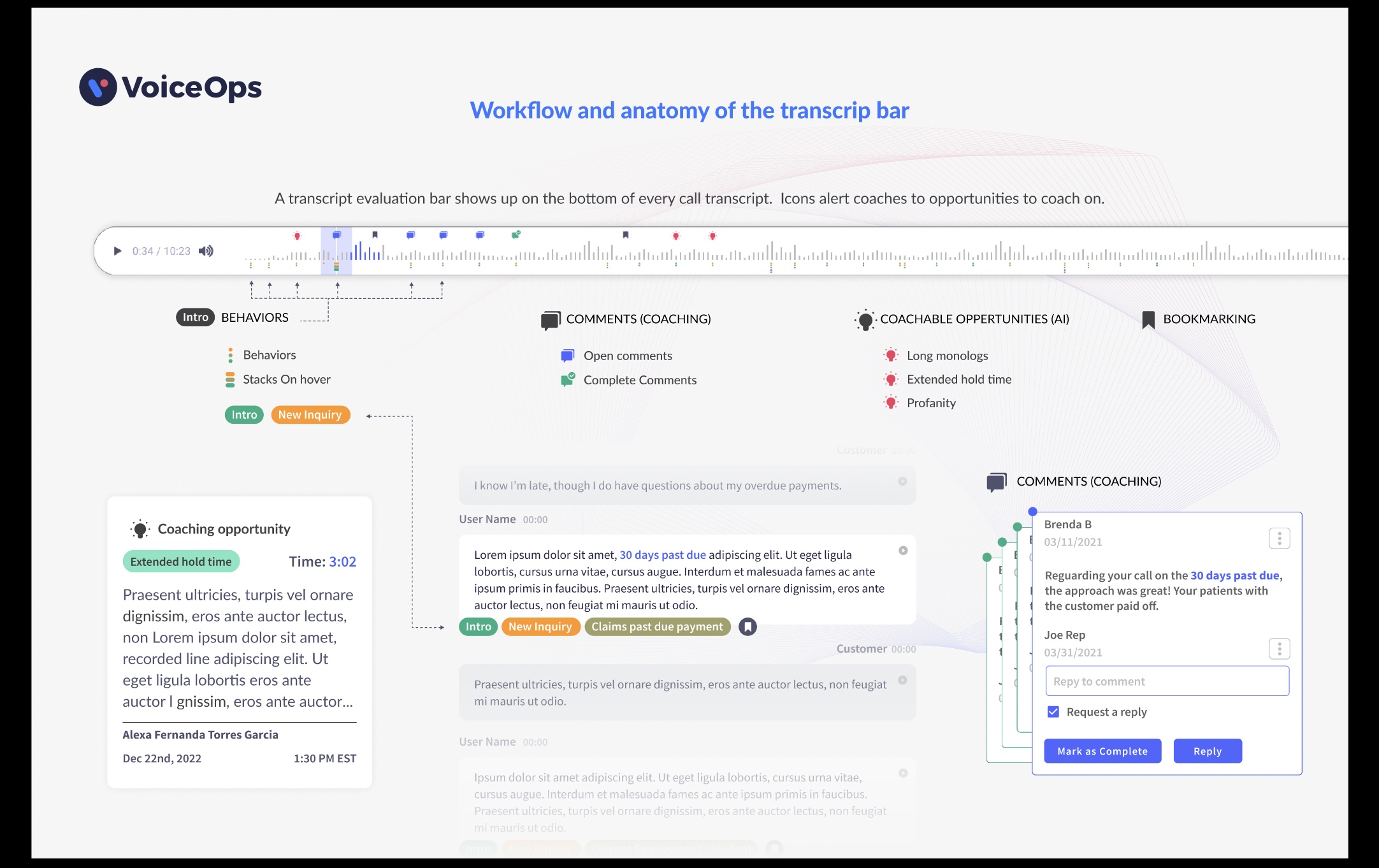
The transcript bar. The bar plays the call, shows where voice activity happens, and reveals the tagged behaviors in color stacks on hover. It also works as a scrubber for long calls, and coaching comments and opportunities can be set, reviewed and bookmarked on it.
UI: color and accessibility
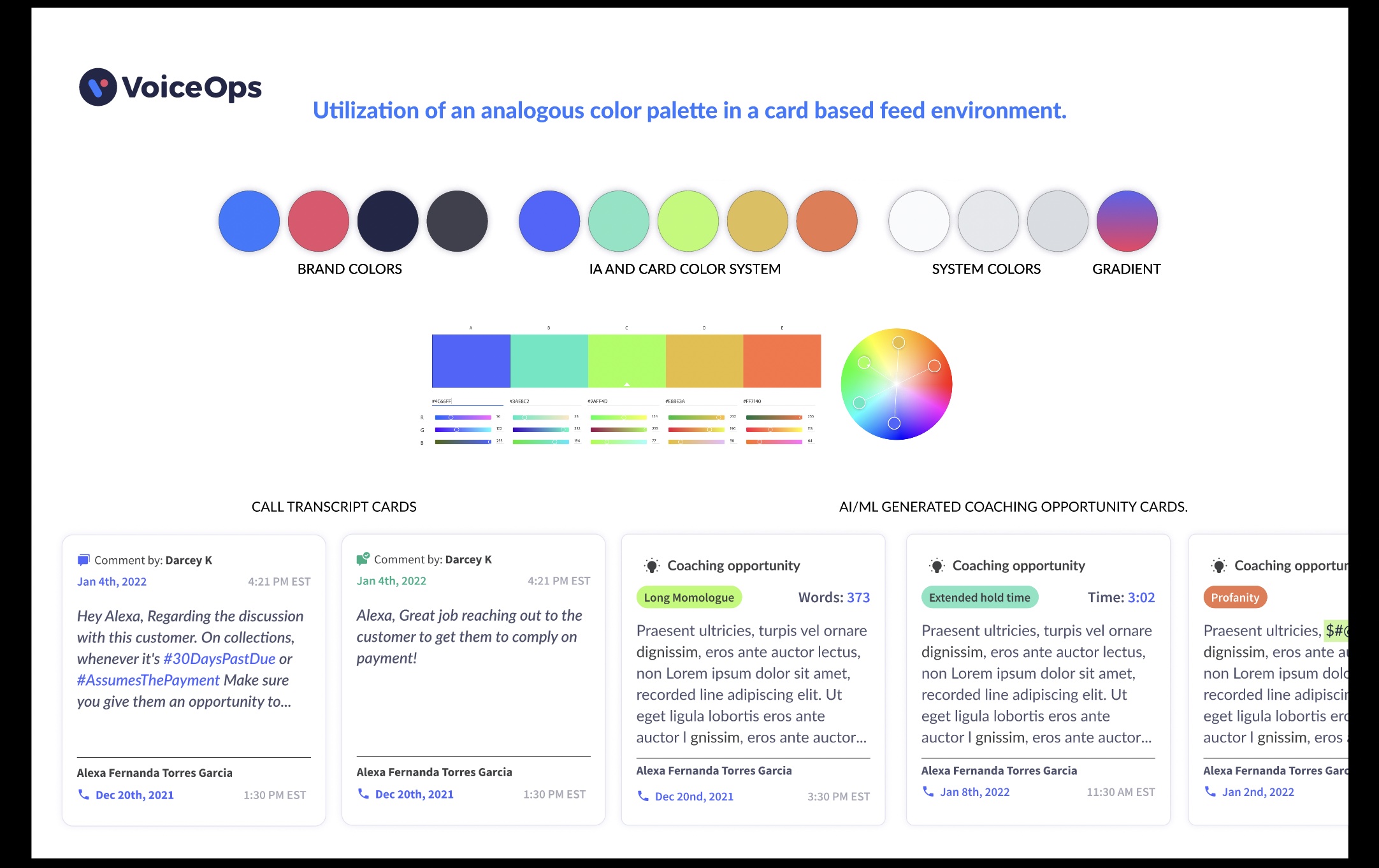
I used an analogous color palette in the call cards. Analogous colors blend naturally, which creates visual harmony and reduces strain, makes the interface calmer to navigate, and lets color guide attention to build a clear hierarchy.
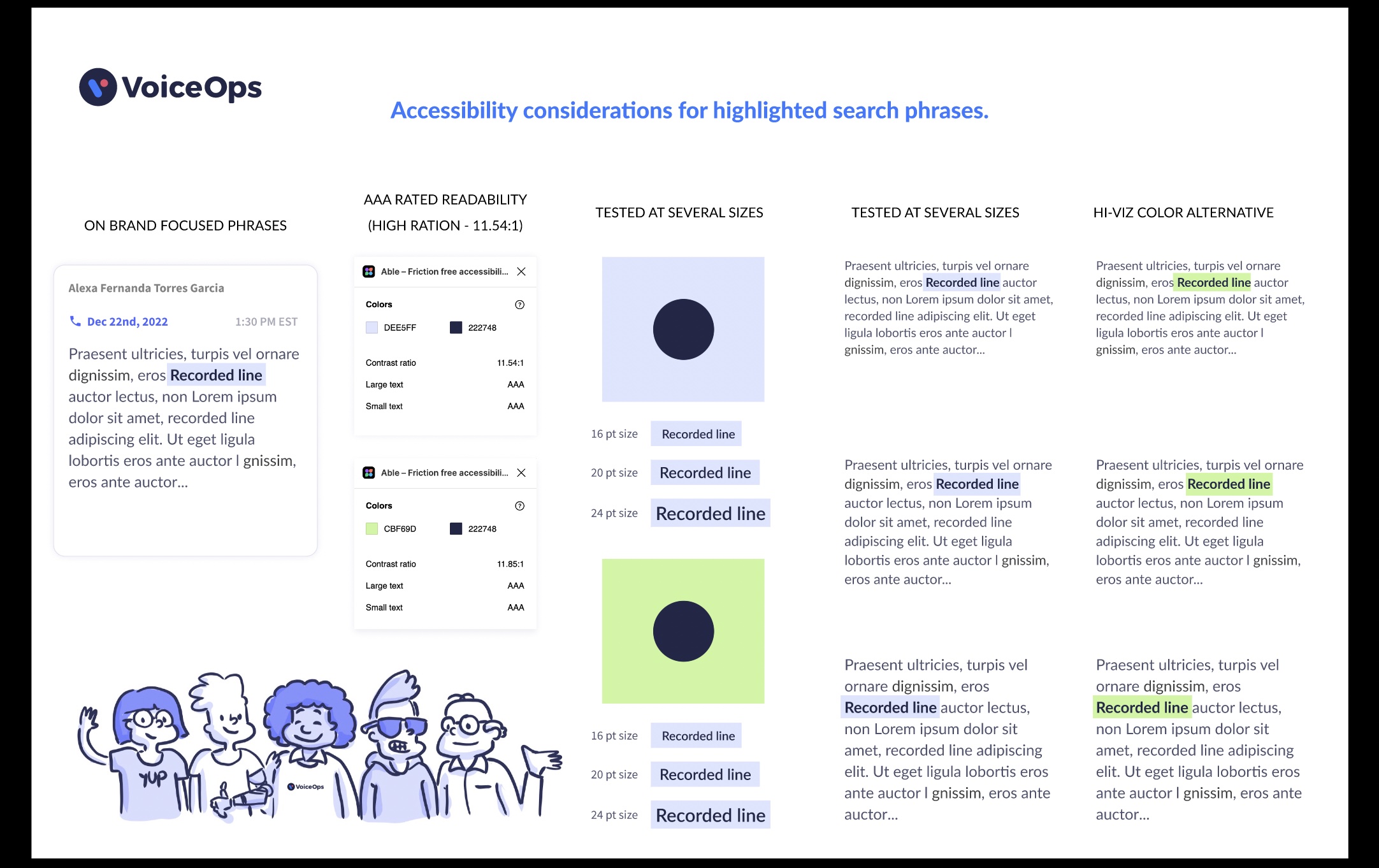
Highlighted search phrases meet AAA contrast ratios and were tested across multiple font sizes. On-brand colors come with high-visibility alternatives, so critical information stays easy to recognize for people with different visual needs.
Conclusion
Research showed that coaches and supervisors struggle to find time for specific behavioral coaching. AI-driven call search and daily AI feeds make it faster to find and correct key behaviors. Combined with microlearning, AI tagging enables tailored, bite-sized coaching sessions that improve retention, reduce fatigue and build a more positive coaching culture, while refining playbook language for long-term performance.
Skills: UX Design, UX Research, AI/ML Product, Microlearning, Color Science, Accessibility.