UX Research, Mental Models, Voice UX
Amazon Fresh: Mental Models for an Alexa-Powered Smart Kitchen
A smart-kitchen concept for Amazon Fresh (a self-restocking refrigerator with personalized food suggestions and Alexa built in) designed from a mental model of how people discover, plan, shop for and cook food.
 Amazon Fresh
- 01 Problem
A connected kitchen has many integration points and many kinds of users. Without a shared model of how people actually think about food, features drift apart and the experience fragments across voice, screens and automation.
- 02 Approach
Ethnographic research organized with affinity diagrams into a mental model (after Indi Young) that maps user goals, system behavior and future releases, then scores interview findings against feature stories.
- 03 Outcome
A research-grounded feature map that showed which behaviors mattered most (searching for foods, comparing recipes and acquiring ingredients) and kept a long-running, multi-release product consistent with user expectations.

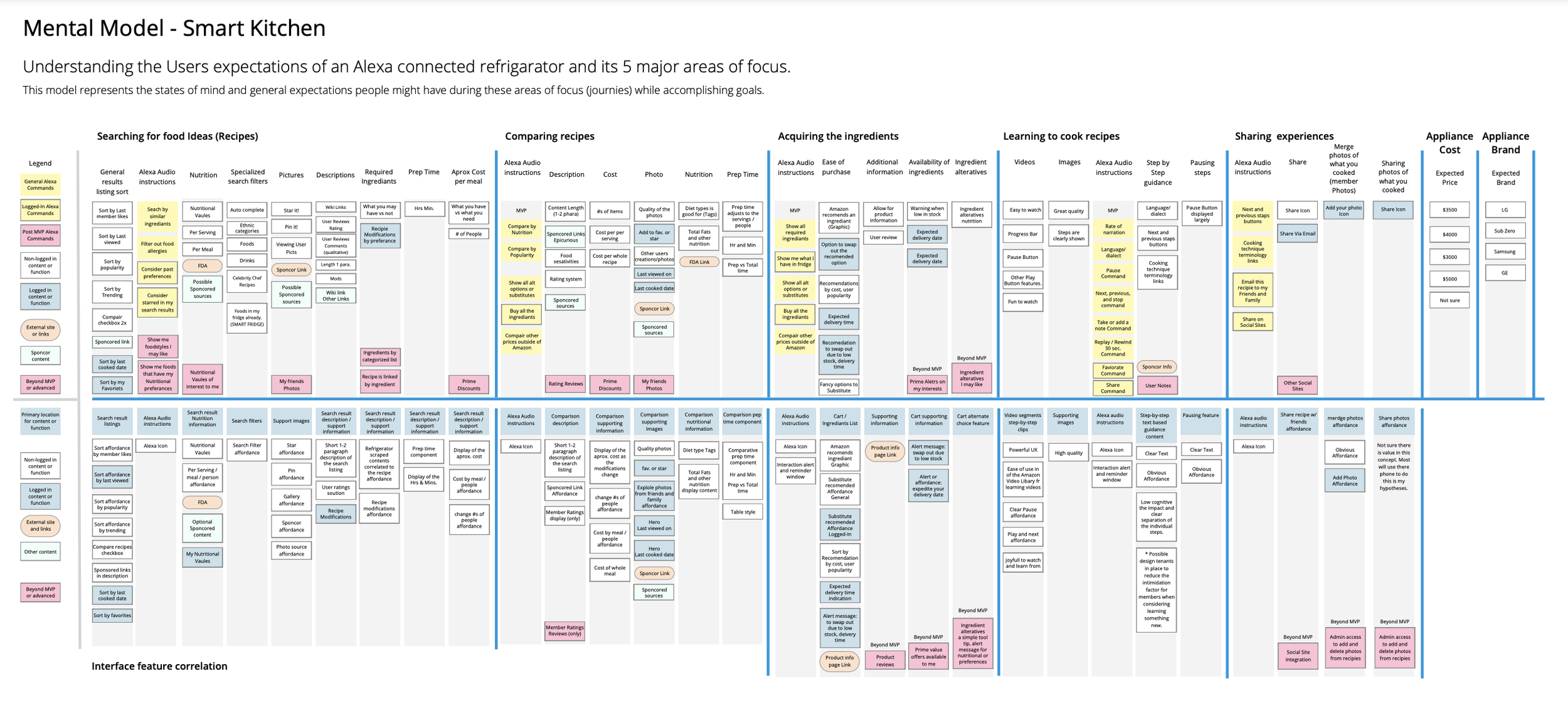
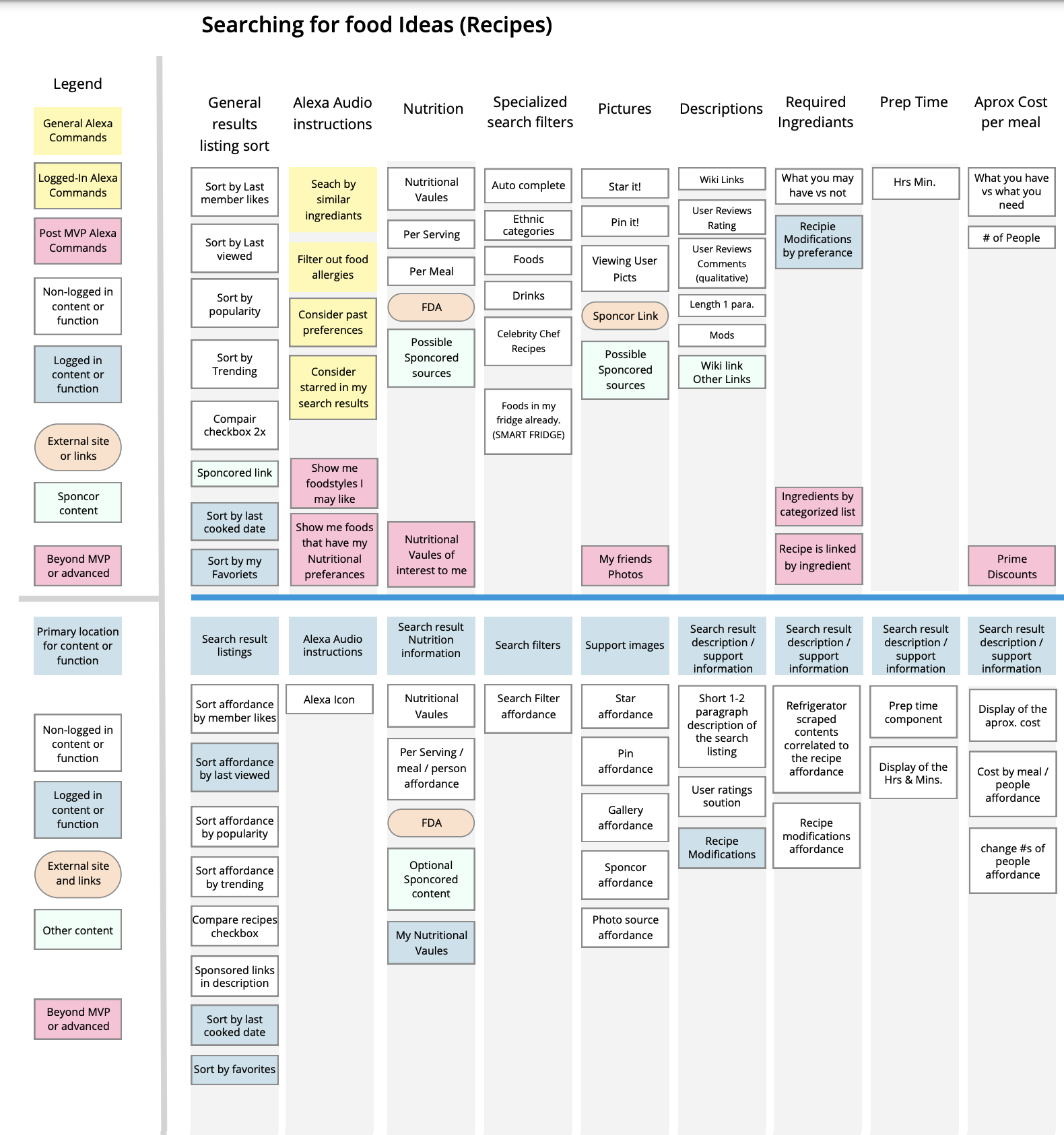
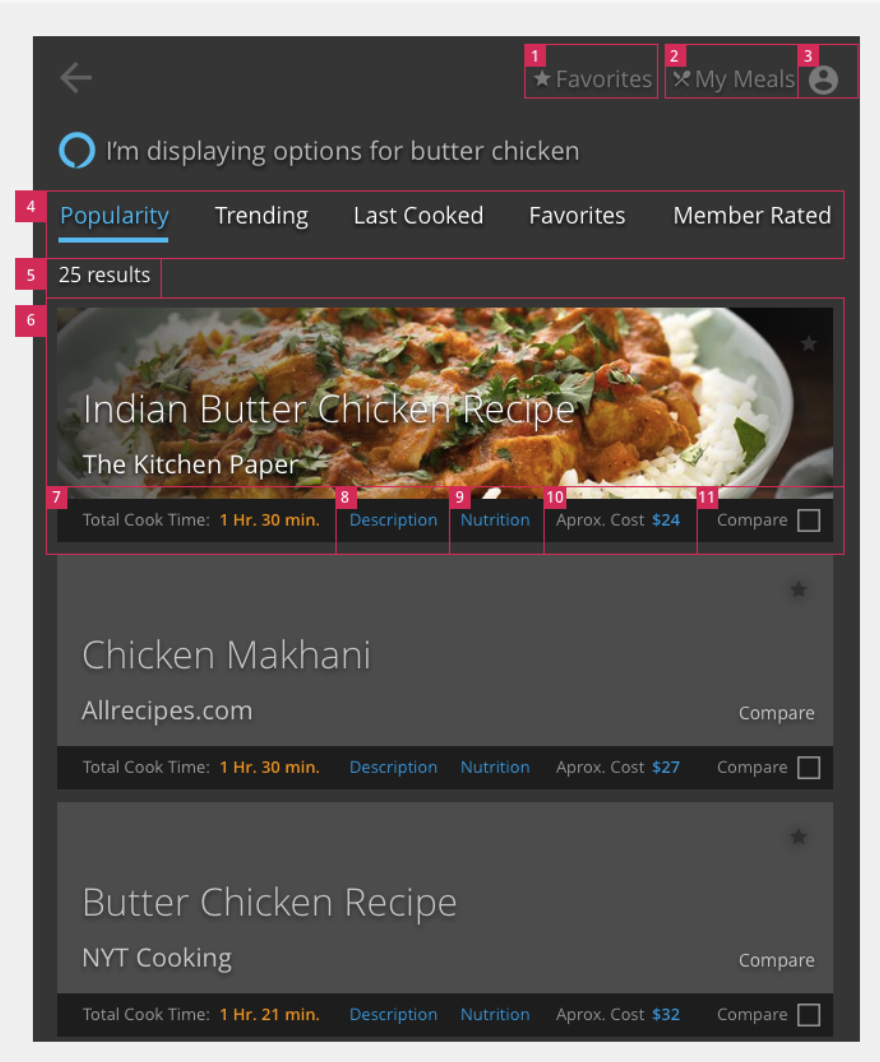
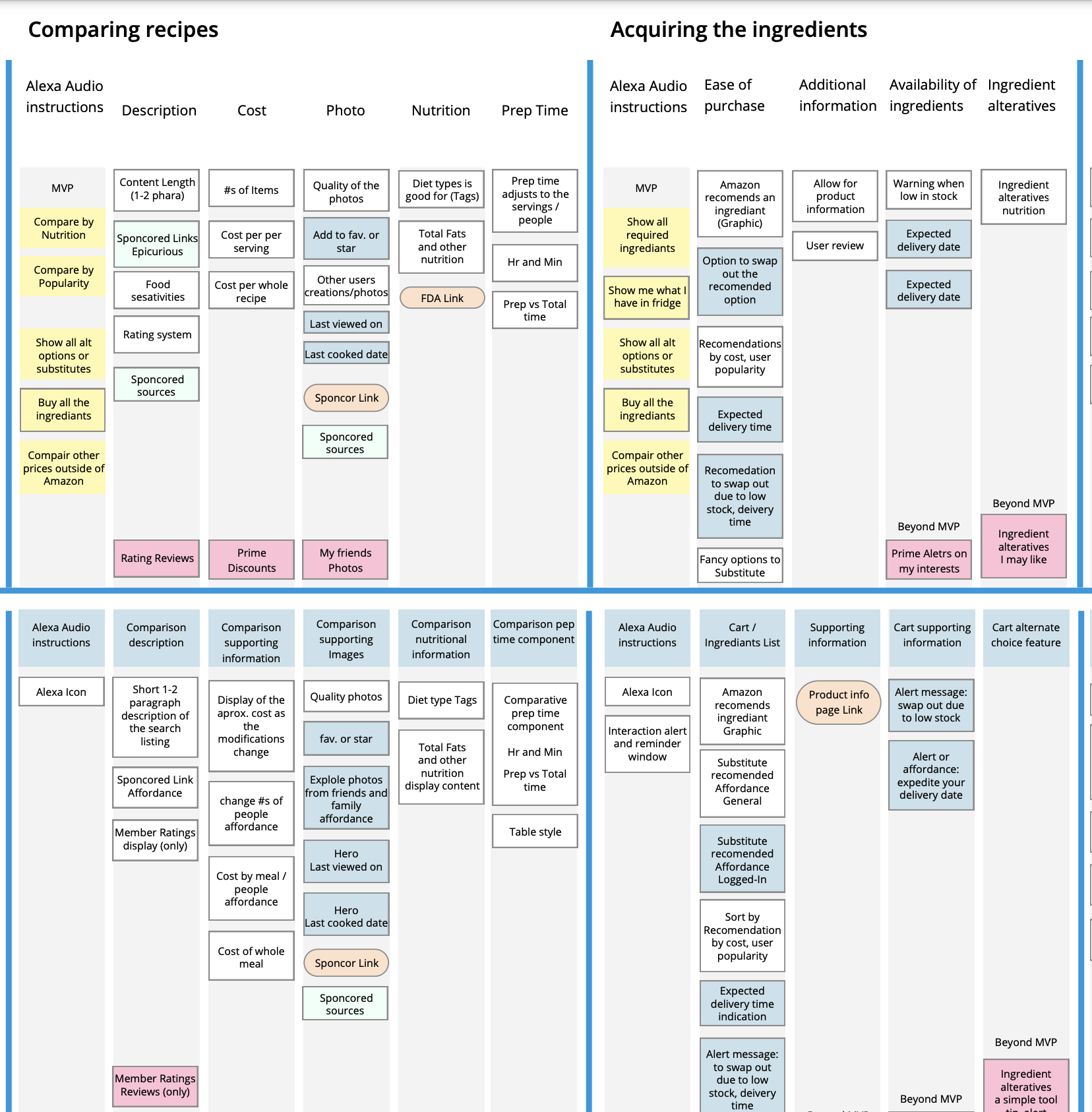
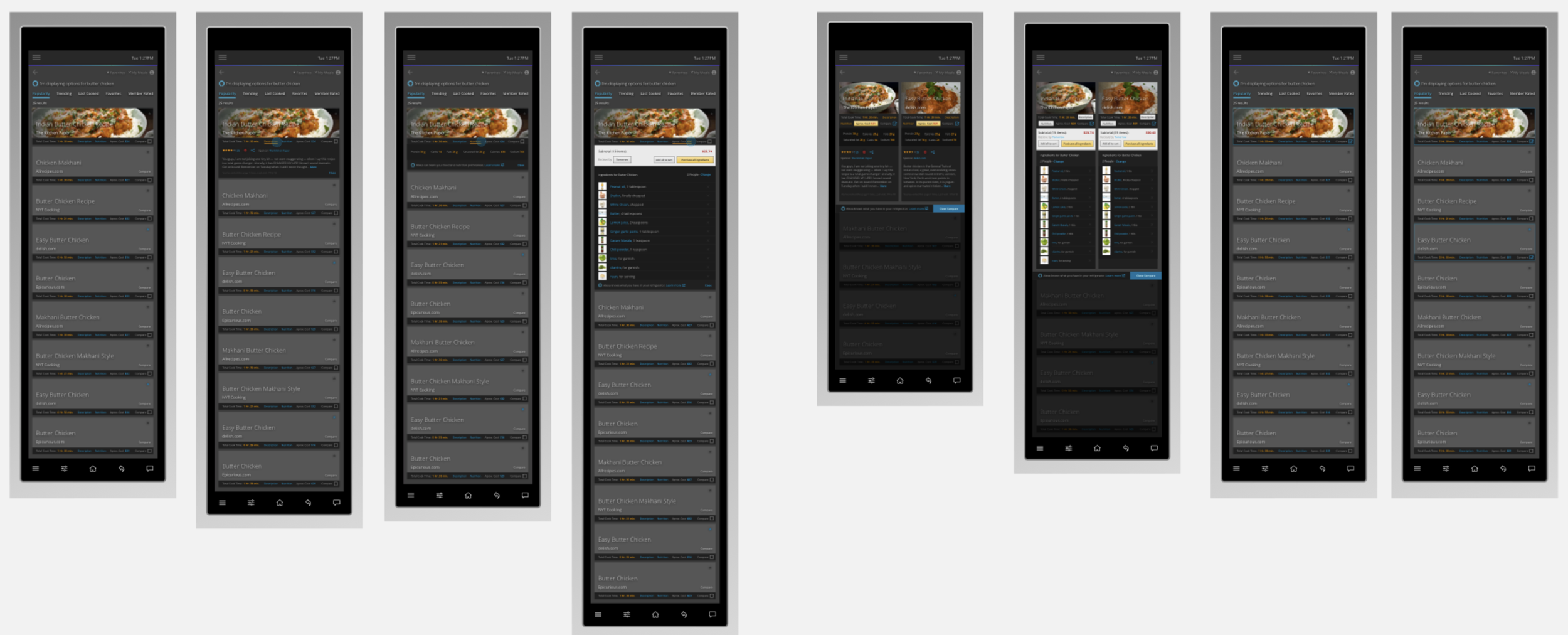
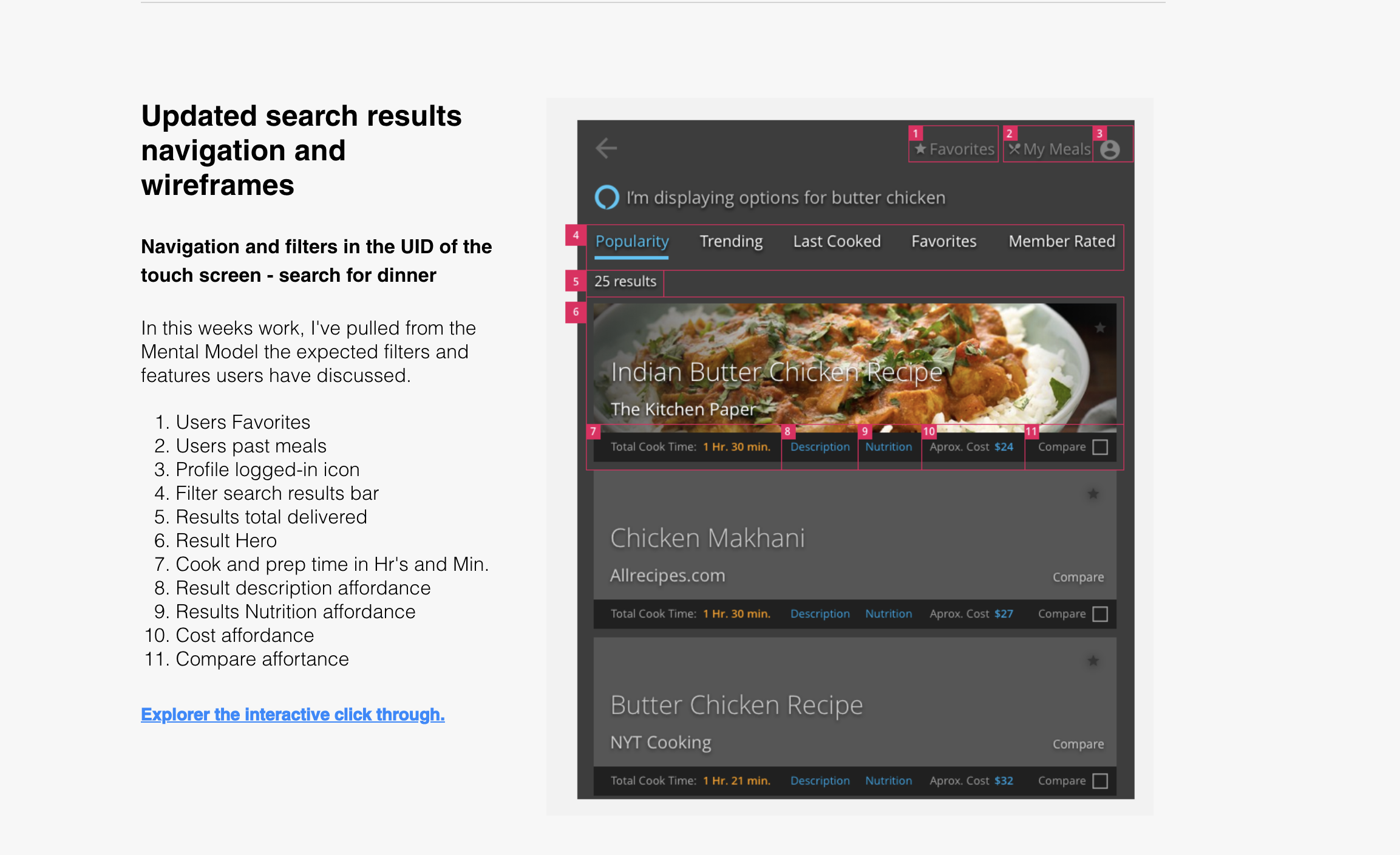
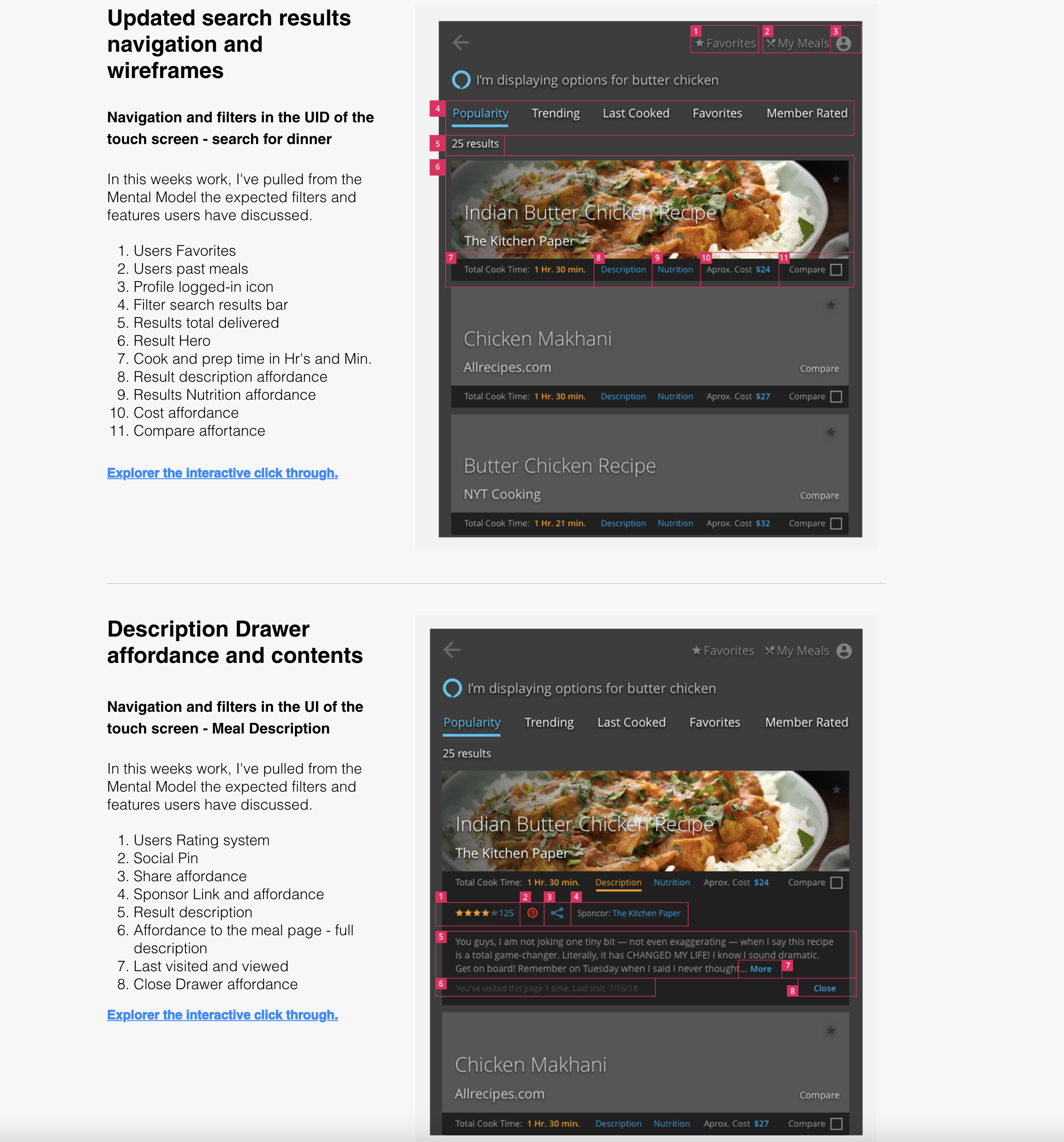
Project summary
The smart kitchen has moved well beyond a refrigerator with a screen. This concept explores an Amazon Fresh refrigerator with Alexa built in, one that restocks itself, suggests food based on personal preferences, and brings voice interaction into the heart of the home. By combining sensors, AI and smart home technology, the goal was a holistic kitchen assistant that makes everyday cooking more convenient, interactive and personal.
The design work started with a question that comes before any screen: how do people actually think about finding, buying and cooking food?
Mental modeling for large systems
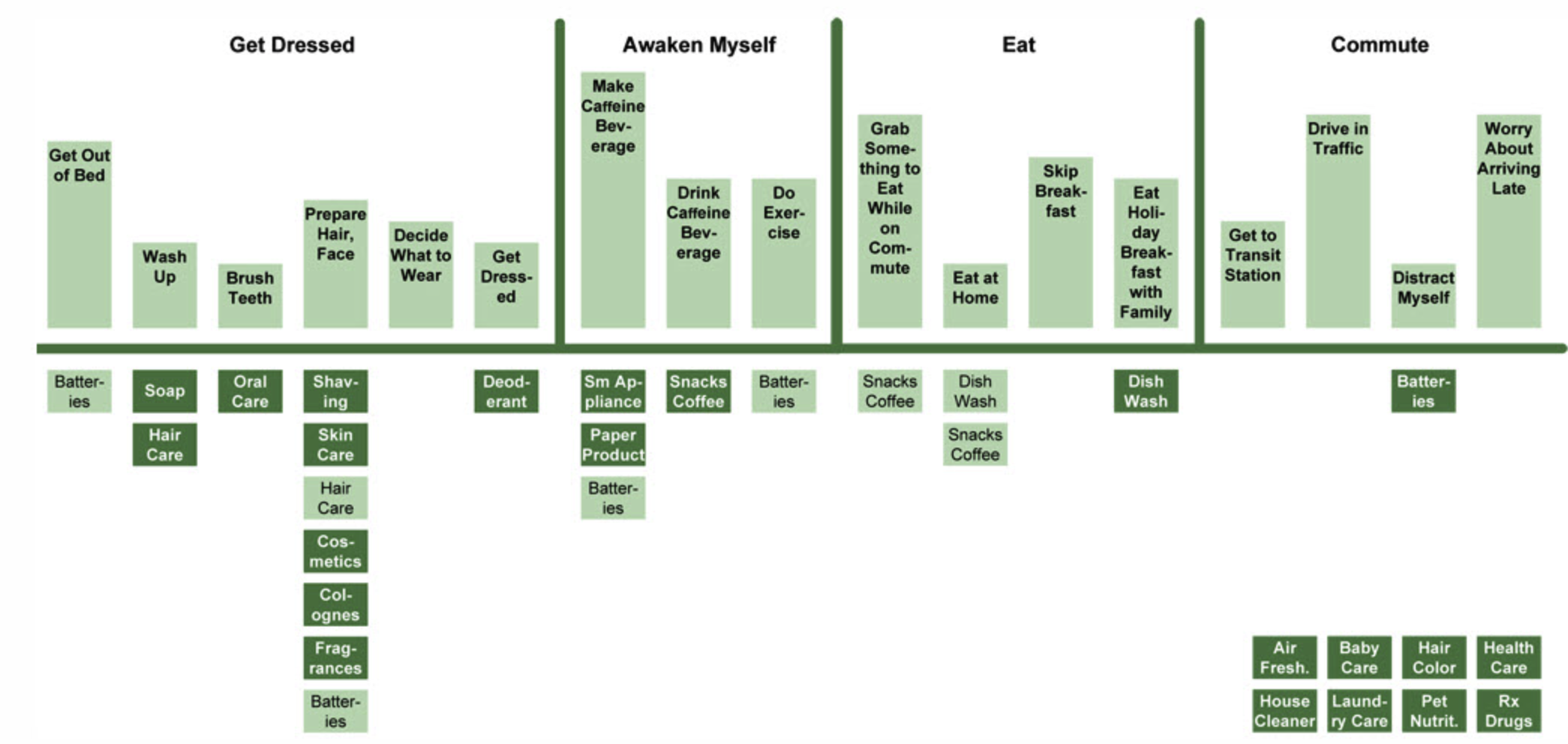
Mental models are critical when designing complex systems with many integration points and many kinds of users. A mental model is a representation of how people perceive a task and move through it, so it helps designers predict behavior and build interfaces that feel intuitive. For a product that spans voice commands, visual interfaces and automated restocking, a well-defined mental model is what keeps the experience coherent across every touchpoint.
The model is built from ethnographic research with the target audience. Observed behaviors are grouped with affinity diagrams, much like sorting groceries into aisles, until clear patterns of goals and tasks emerge.
Why it matters on long projects
Products like this are built over years, across many releases and teams. A mental model gives that work a stable frame of reference. Teams can test each new feature against how people really think about food discovery, recipe preparation and buying ingredients, so every addition fits the broader ecosystem instead of becoming one more disconnected capability.
Anatomy of the model
The model works on three layers:
- The user layer. People's goals and behaviors, such as discovering recipes, planning meals and ordering ingredients.
- The system layer. What the product has to do to support those behaviors, including data processing, feedback loops and automation such as restocking.
- The release layer. How new features slot into the existing model over time, so the experience evolves without disrupting what people already rely on.
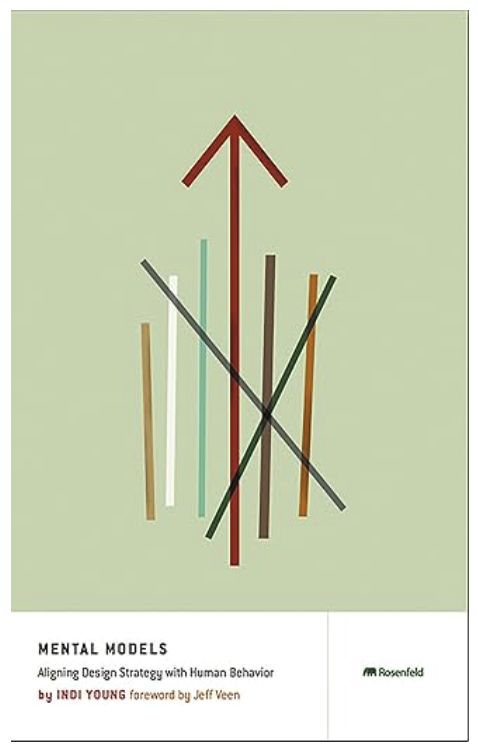
Features are then aligned beneath the behaviors they support, so the findings in the model directly shape what the product offers. The method follows Indi Young's Mental Models: Aligning Design Strategy with Human Behavior (Rosenfeld Media, 2008).
Topics of focus
I started with a hypothesis of the five areas that matter most for discovering new foods and recipes in a smart kitchen:
- Searching for foods
- Finding recipes
- Acquiring the ingredients
- Learning how to cook the recipes
- Sharing experiences, from ideas, comments and notes to photos, creations and stories
From findings to features
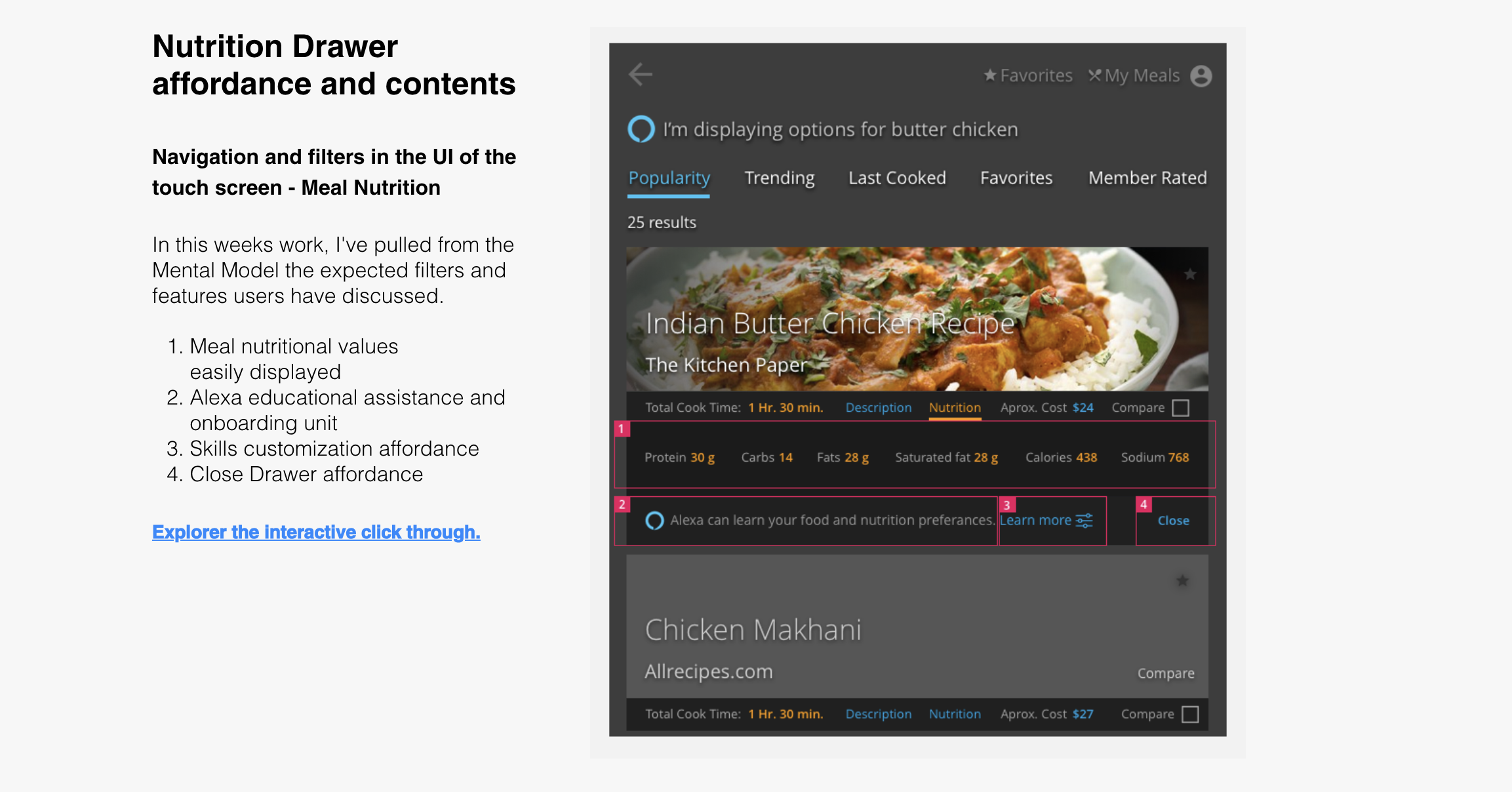
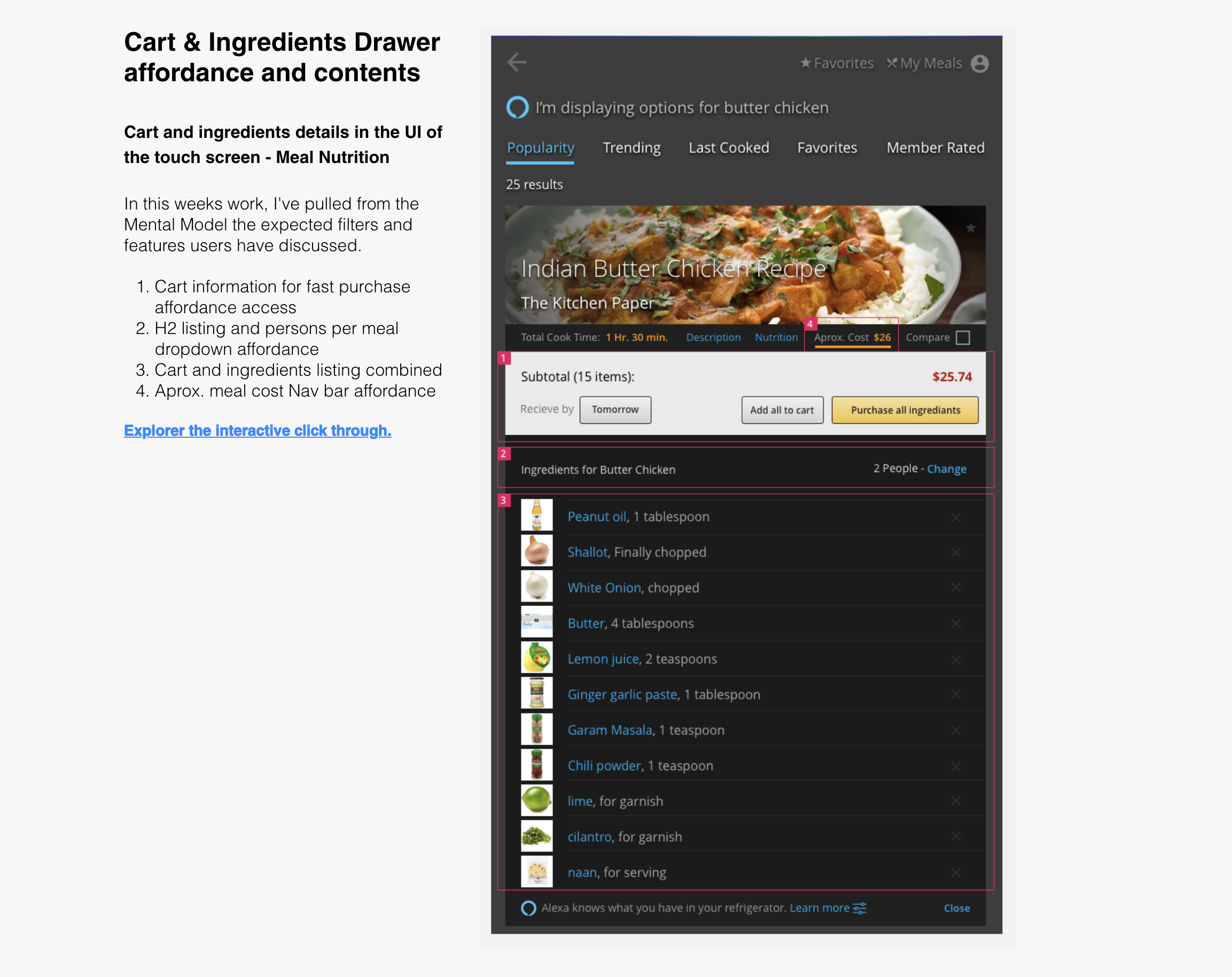
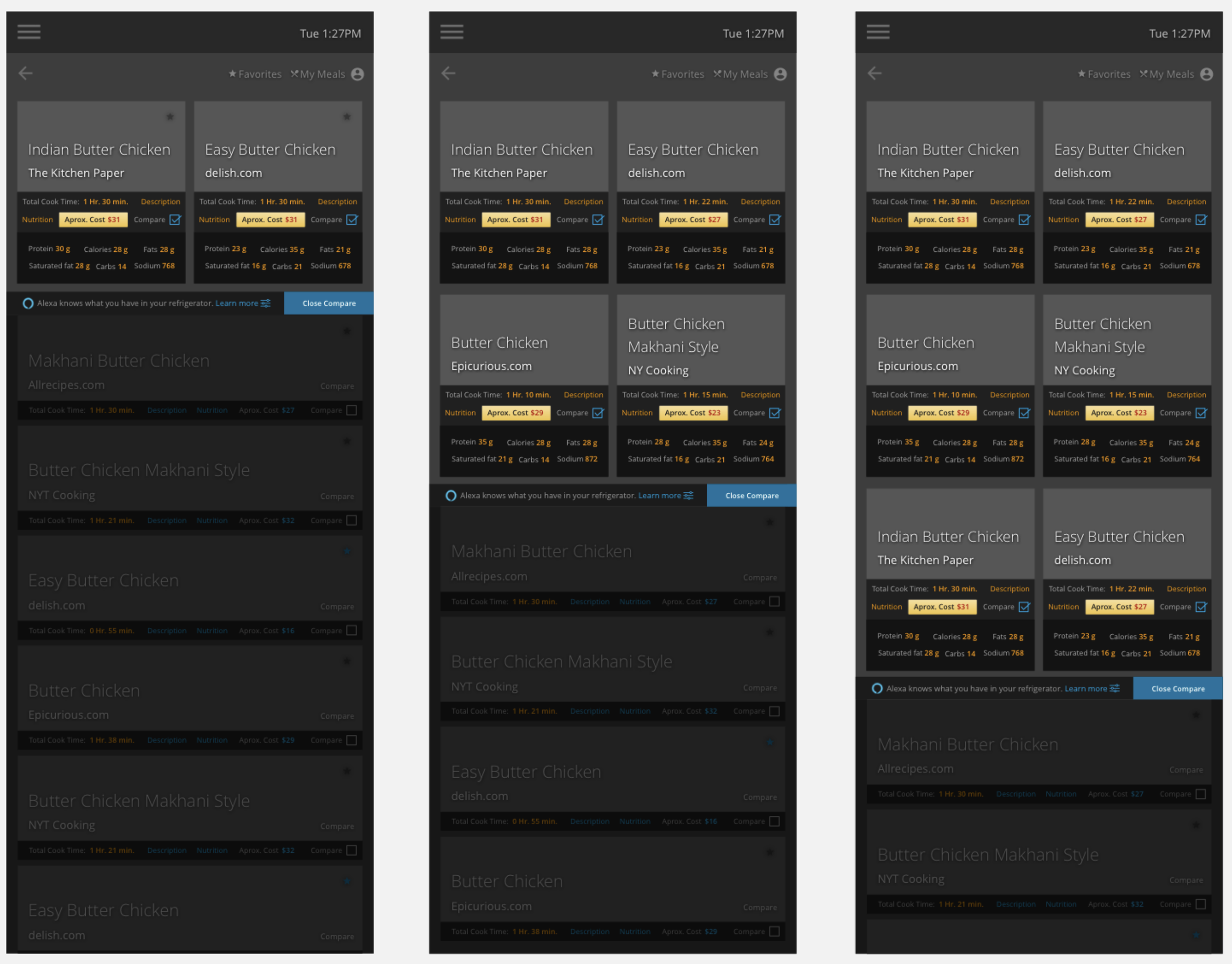
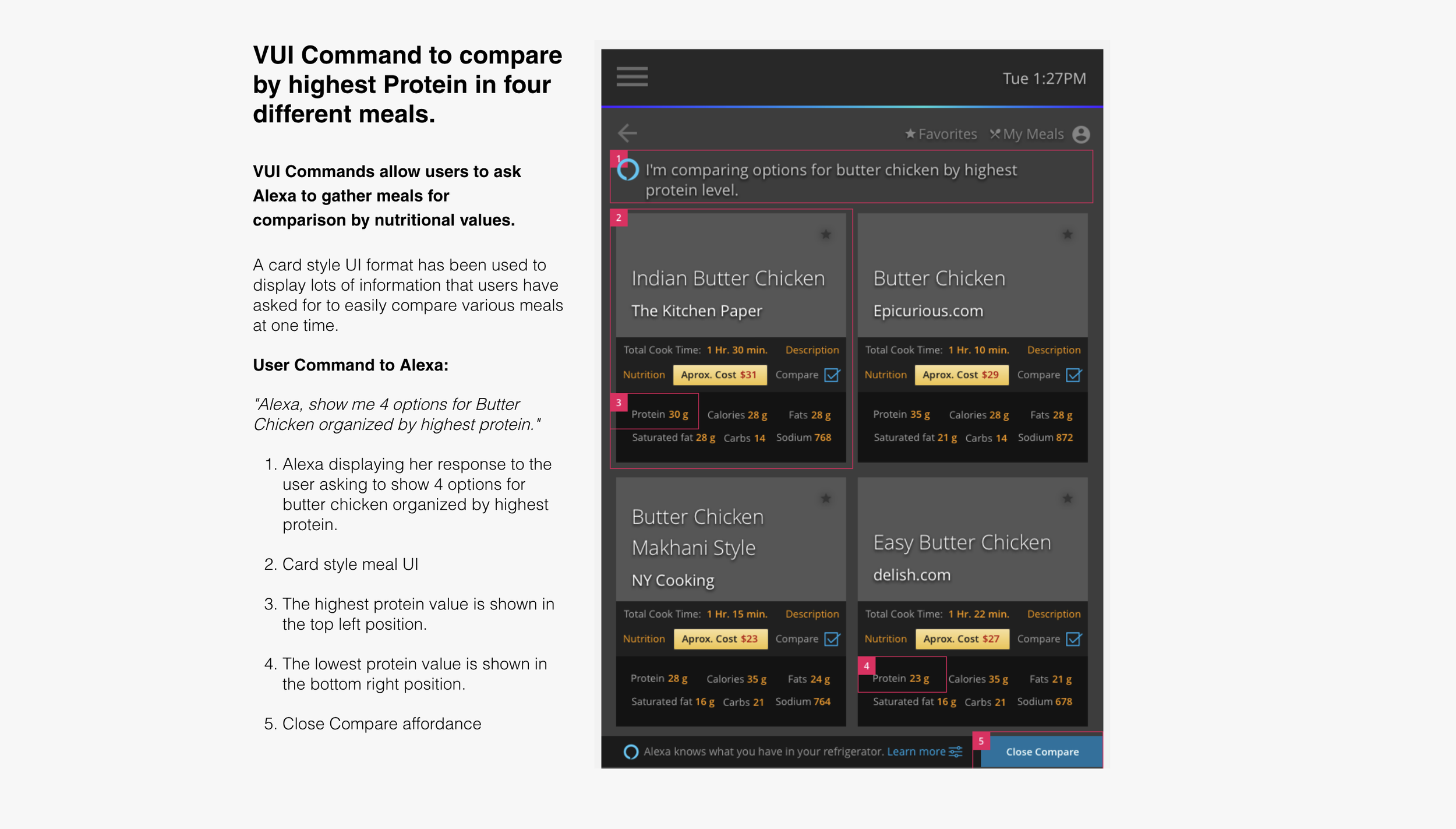
Interview findings were mapped in the top half of a quadrant model, with feature stories aligned in the bottom half, so every proposed feature traced back to an observed need. Three areas scored highest with the people interviewed: searching for foods, comparing recipes and acquiring the ingredients. Those became the priorities for the experience and the screens that followed.
The outcome
The mental model gave the concept a foundation built on real behavior. By addressing the gaps in how people discover recipes, manage ingredients and learn new techniques, the smart refrigerator simplifies meal planning, supports culinary exploration and builds a more connected, intuitive relationship with food. The screens in the gallery show how those priorities translate into the interface.
Skills: UX Research, Ethnography, Mental Models, UX Design, Voice UX, Product Strategy.