HealthTech, Enterprise UX, Design Systems
Adaptive: Modernizing Order Management for a Biotech Leader
A dual-track modernization of Adaptive's Order Management and LIMS, reducing analyst cognitive load, re-centering the architecture on patients, and adopting IBM's Carbon Design System as a scalable enterprise framework.
 Adaptive Biotechnologies

- 01 Problem
Outdated OMS and LIMS tools made specimen tracking and patient data management inefficient; non-intuitive workflows and a patchwork of component libraries raised analyst cognitive load.
- 02 Approach
A dual-track process replicated existing workflows for continuity while introducing improvements, grounded in ethnographic research and SME audits, and standardized on Carbon.
- 03 Outcome
A patient-centric, dashboard-driven system on a scalable Carbon foundation that rebuilt user and leadership trust.

Problem
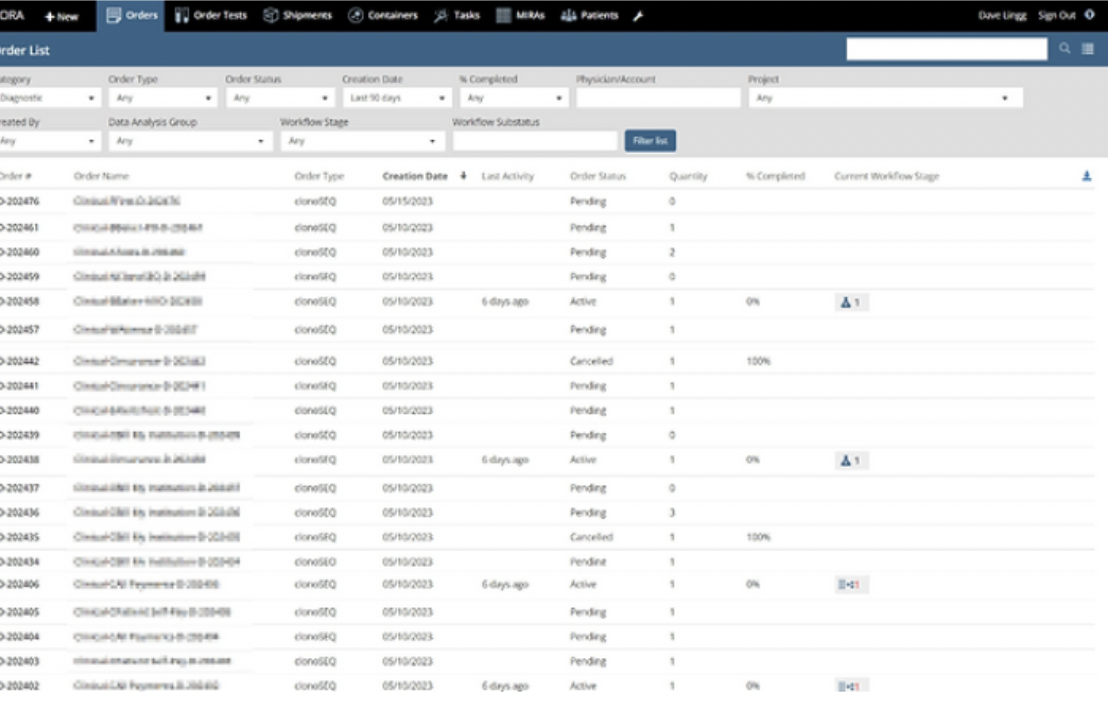
Adaptive's outdated Order Management System and LIMS caused inefficiencies in specimen tracking and patient data management. Non-intuitive workflows and limited insight raised analysts' cognitive load, and the original system carried many component libraries with no official design system. The company needed one unified, scalable platform.
Approach
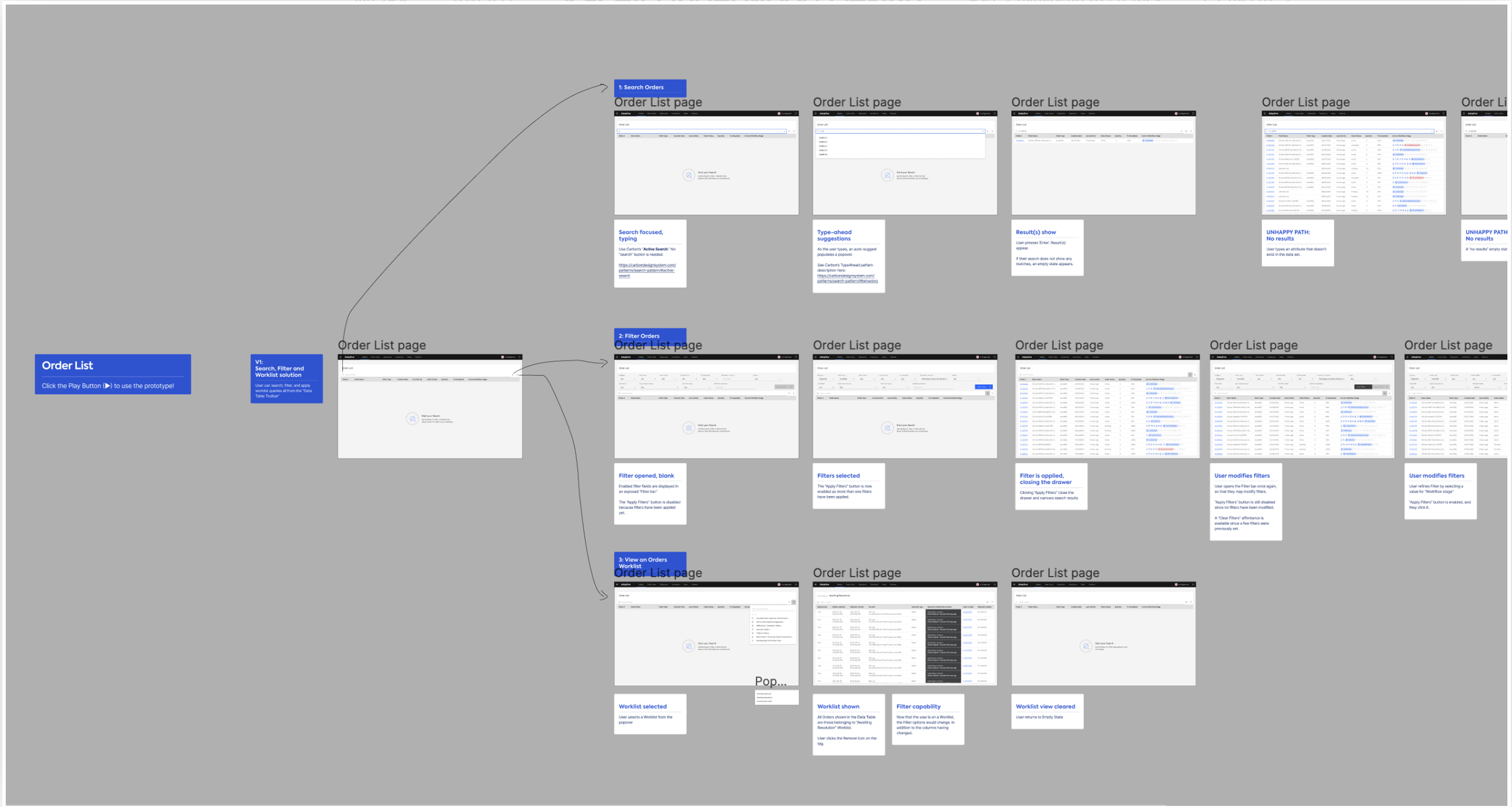
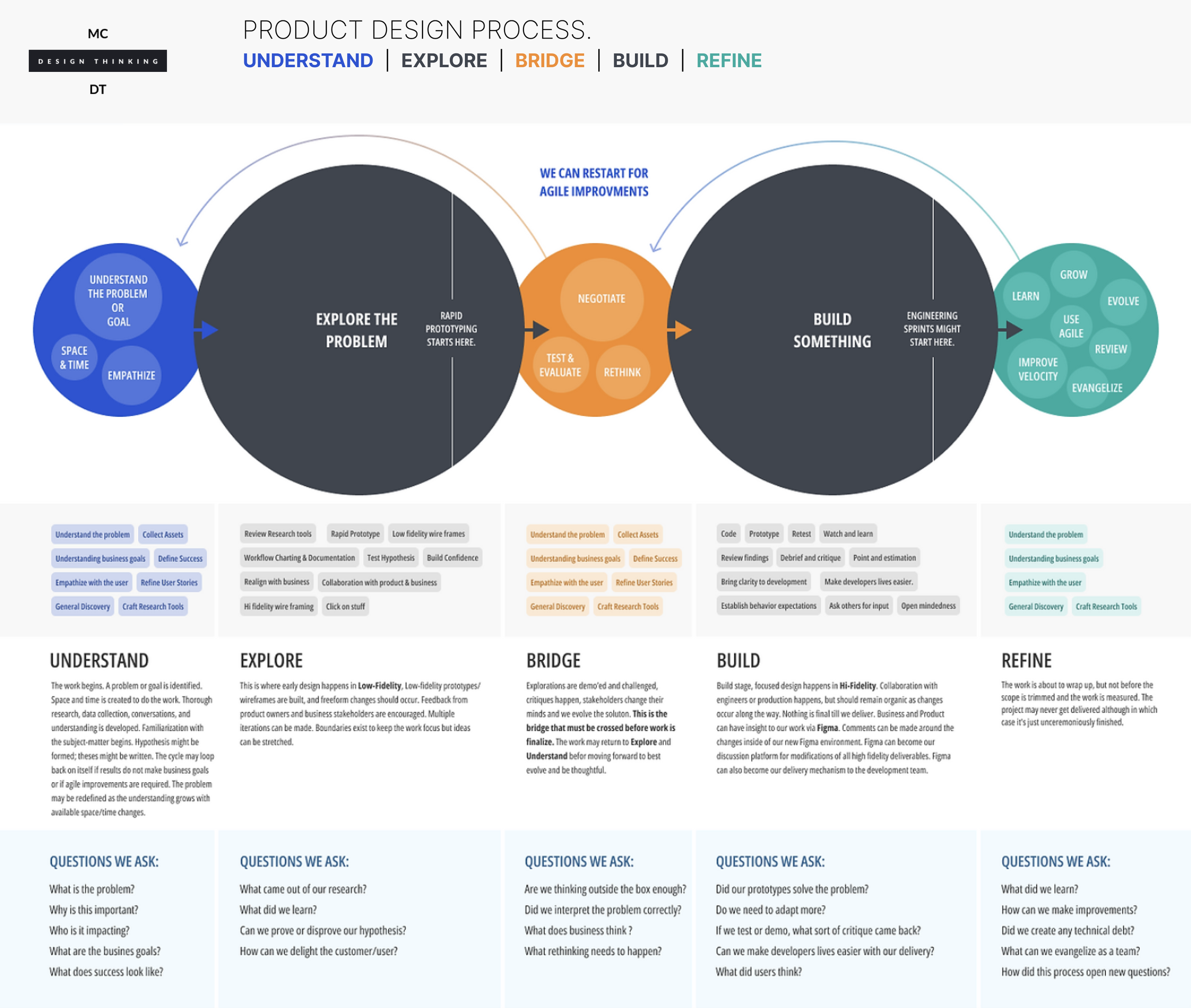
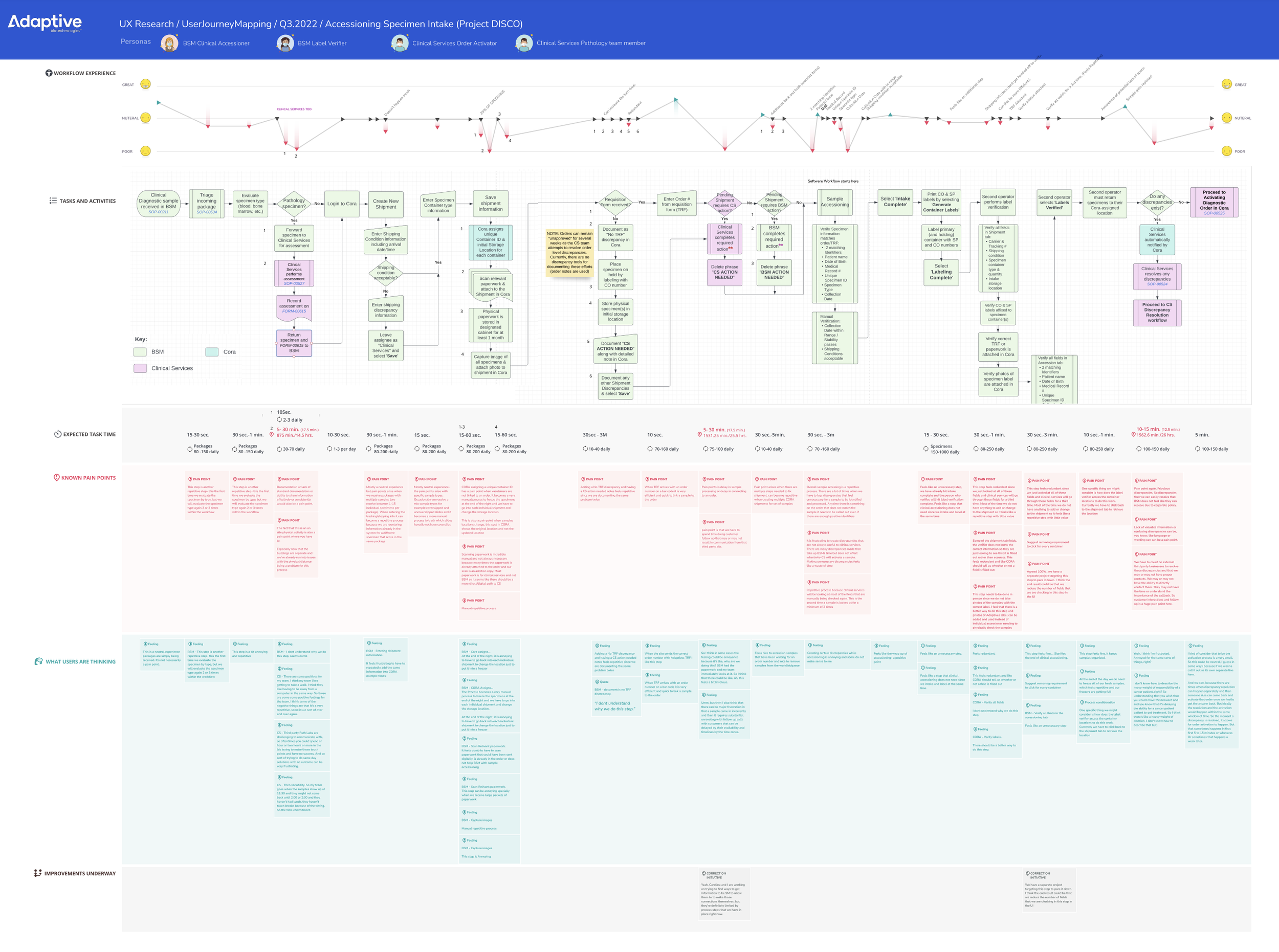
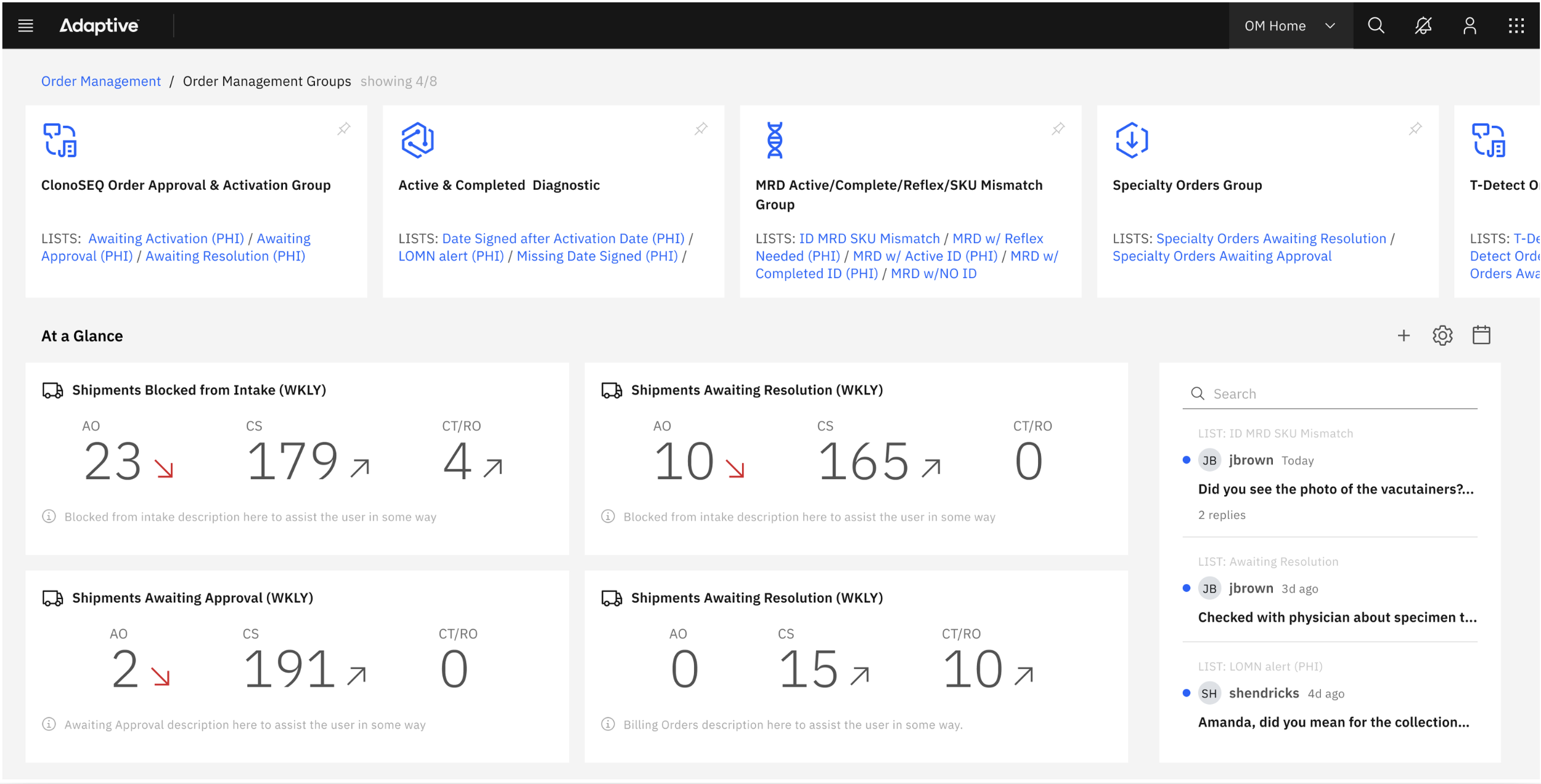
A dual-track process replicated existing workflows to preserve continuity while layering in improvements. Early ethnographic research and SME audits surfaced pain points, and IBM's Carbon Design System was adopted as the scalable framework.
What research surfaced
Six themes shaped the work:
- Cognitive load reduction. Keep the dense fields analysts need, but calm the interface around them.
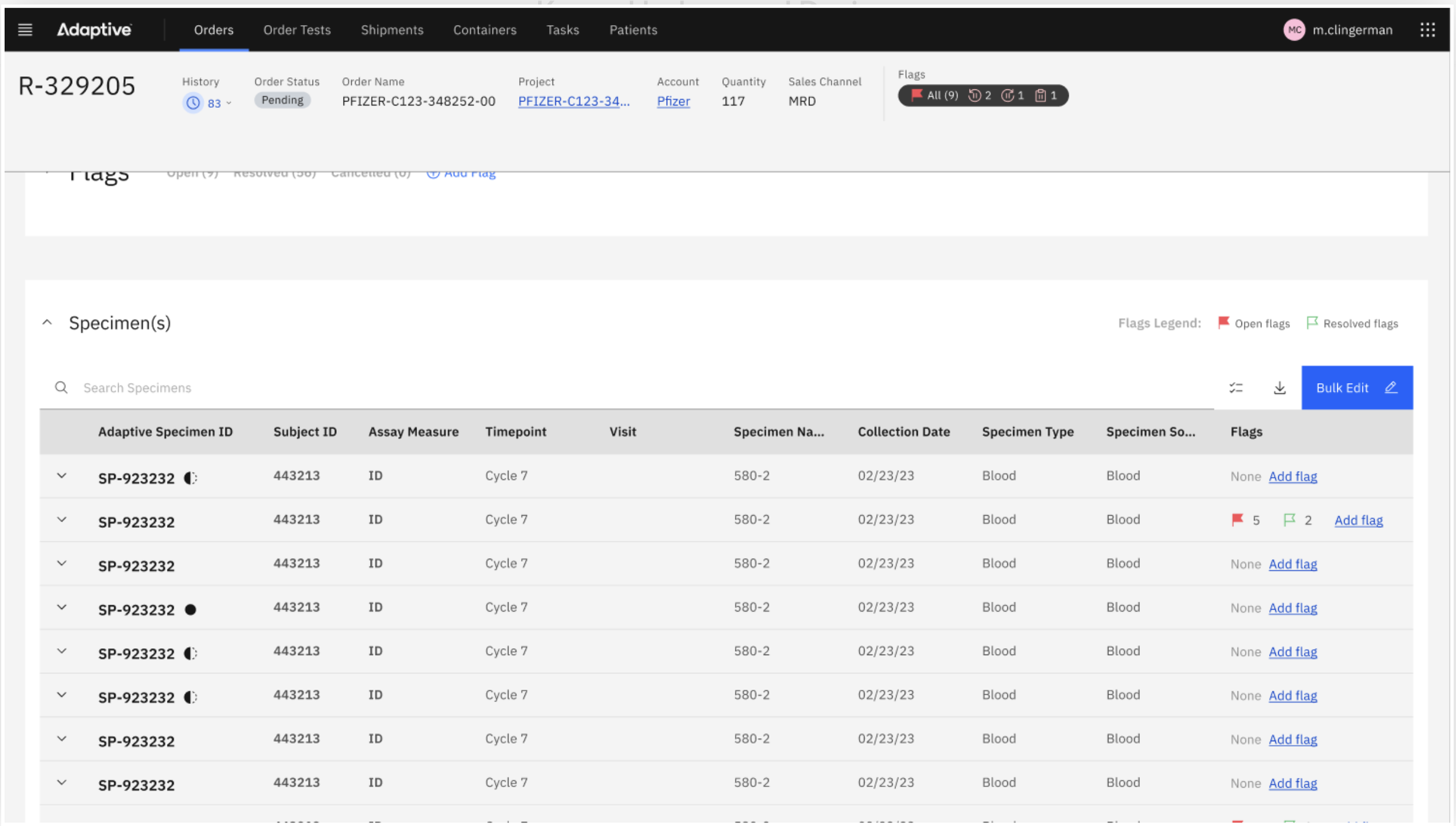
- Daily work management. Support batch handling and the many-tabs reality of tracking orders and patients.
- Navigation. Apply Carbon's patterns to a navigation that had been an afterthought.
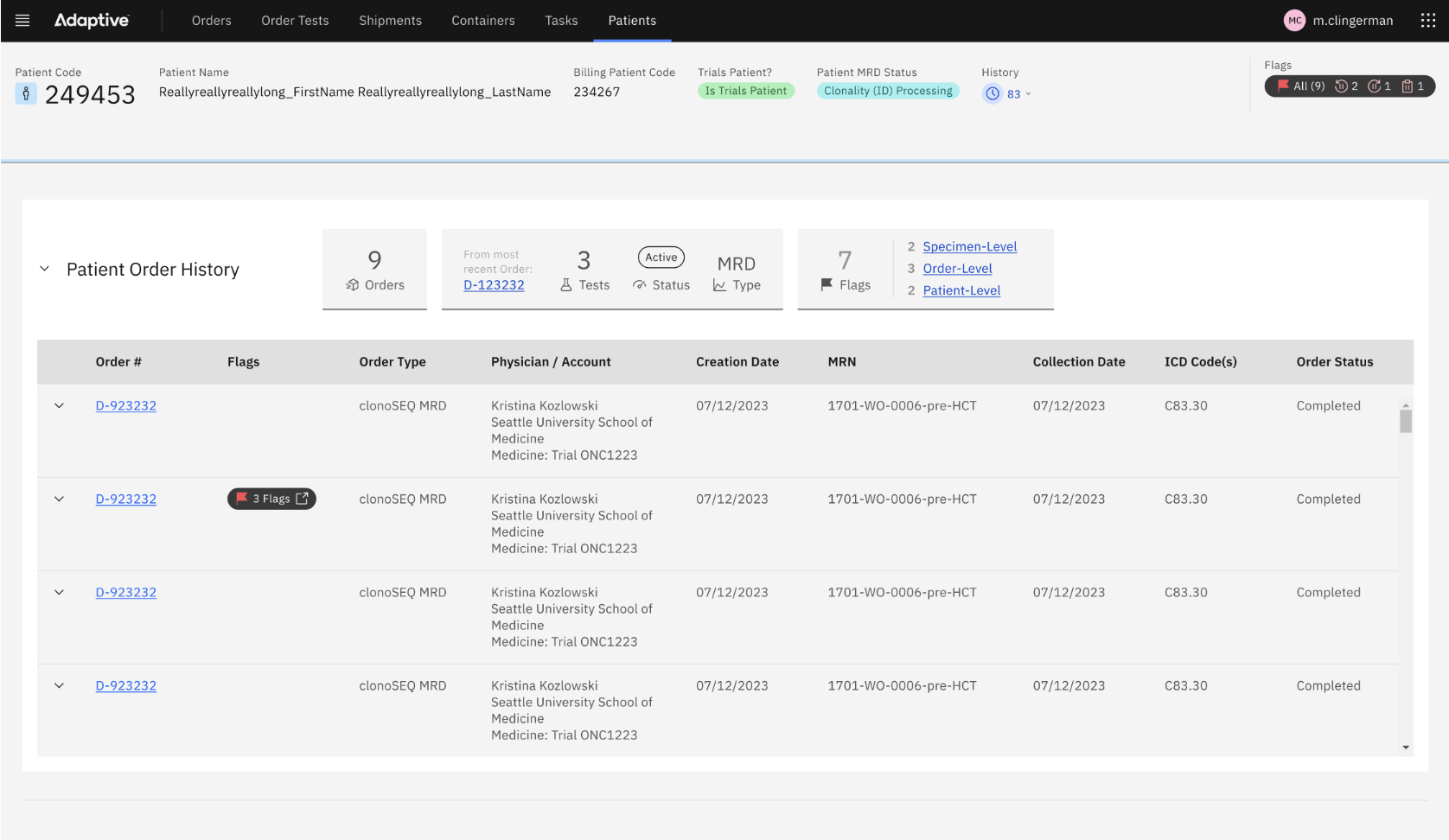
- Patient-centric architecture. Reorganize around patients, not orders; kill duplicate records; let clinical trials link de-identified data.
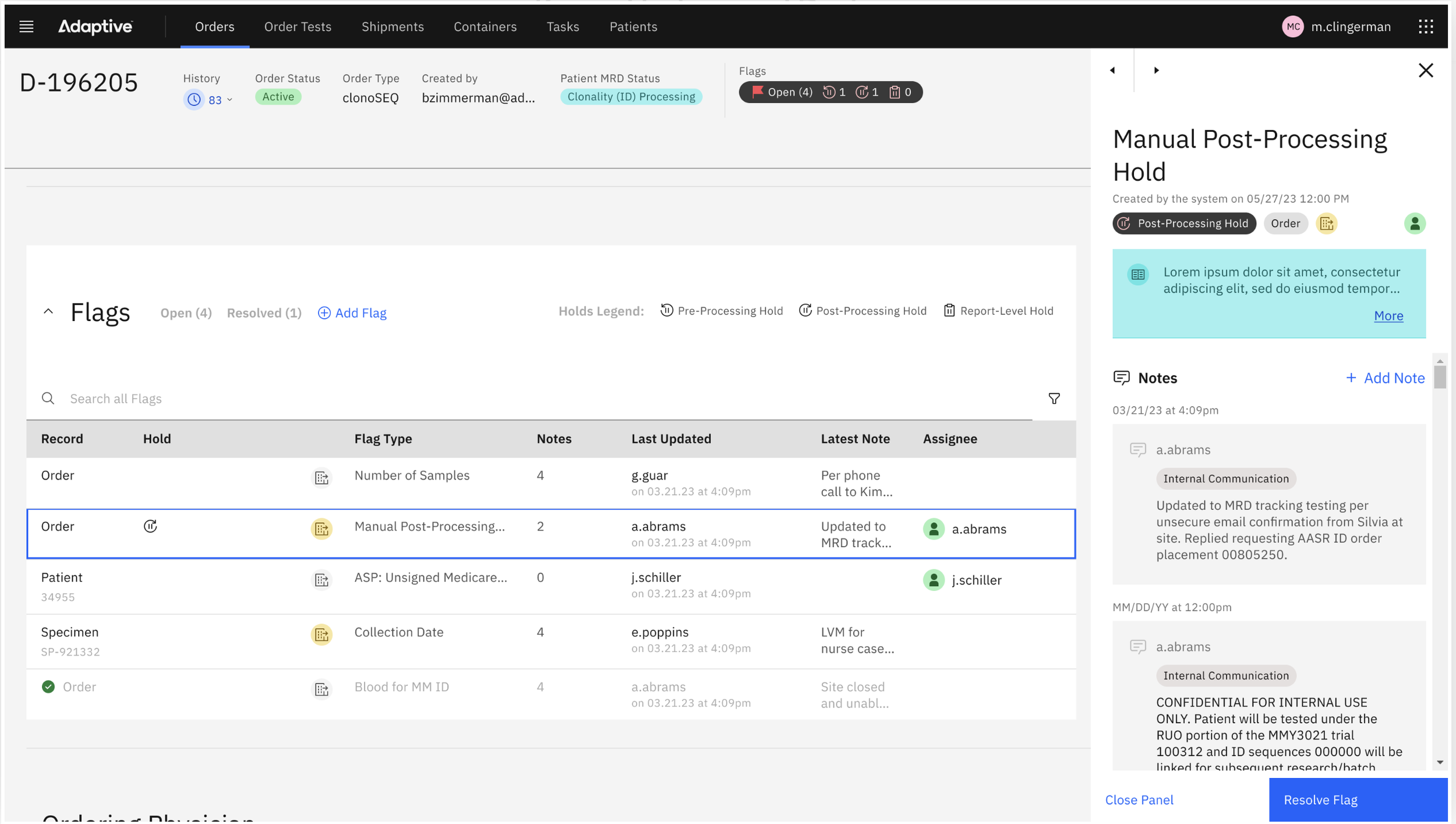
- Specimen & shipment workflows. Consistent terminology, clear parent/child relationships, and a unified "Flags" alert.
- Dashboard analytics. Give analysts and leadership real visibility into status, issues, revenue, and incoming orders.
Impact
The modernized system improved user trust, reduced inefficiency, and streamlined operations. Leadership trust was rebuilt through communication and feedback sessions, and Carbon set a foundation for long-term scalability.
Skills: Product Strategy, UX Design, UX Research, Design Systems, Product Ownership.