UX Research ·
The Imperative of User Research in Product Development
User-centered design puts people's needs, behaviors and experiences at the front of product development. Why research is indispensable, and the design process I use to put it into practice.

In the contemporary product development landscape, user research has emerged as an indispensable component, guiding the creation of products that resonate with end users. This approach transcends traditional design paradigms by placing users' needs, behaviors, and experiences at the forefront, ensuring functionality and user satisfaction.
Foundations of User-Centered Design
User-Centered Design (UCD) is a methodological framework that prioritizes the user's perspective throughout the design and development process. By engaging users at each stage, from initial concept to final implementation, UCD facilitates the creation of intuitive and accessible products. This iterative process not only refines usability but also aligns the product's objectives with the user's expectations, resulting in enhanced user experiences. About User Centered Design.
This is my personal UCD Design Process. Post yours in the comments!
[
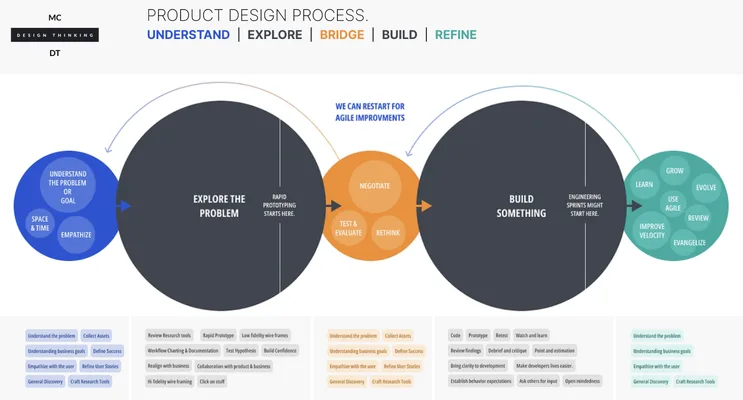
Great solutions start with a process. We all have one. This is mine. ;)](https://www.msc-uxdesign.com/design-process)
Participatory Design: Collaborative Innovation
Participatory Design (PD) extends the principles of UCD by actively involving users as co-designers. This collaborative approach democratizes the design process, allowing users to directly contribute their insights and preferences. Such engagement fosters a sense of ownership among users and leads to solutions that are more closely aligned with their actual needs. The integration of diverse perspectives through PD has been shown to result in more innovative and effective design outcomes. User Centered Design and Participatory Design.

Advancements in Ethnographic Research Methods
Recent advancements in ethnographic research methods, such as mobile ethnography, have further enriched user research practices. By leveraging mobile devices, researchers can now collect real-time data on user interactions in natural settings. This approach captures authentic user behaviors and contexts, providing deeper insights into user needs and challenges. The immediacy and accuracy of mobile ethnography enhance the reliability of the data collected, leading to more user-centric design solutions. About Mobile Ethnography.
The Role of Empathic Design in Addressing Latent Needs
Empathic design emphasizes understanding and addressing the unarticulated needs of users. By observing users in their natural environments and empathizing with their experiences, designers can identify latent needs that users themselves may not have recognized. This deep level of understanding leads to the development of products that not only meet explicit requirements but also delight users by addressing their implicit desires. Such an approach fosters stronger emotional connections between the product and its users. About Empathic Design

Living Labs: Real-World Testing Grounds
The concept of Living Labs has emerged as a dynamic environment for user-centered innovation. These real-world testing grounds facilitate collaboration among users, researchers, and developers to co-create and evaluate new products and services. By situating the development process within the users' contexts, Living Labs ensure that the solutions are practical, relevant, and readily adoptable. This ecosystem fosters continuous feedback and iterative improvement, leading to more robust and user-aligned products. About the Living Lab.
Conclusion
Integrating user research into product development is not merely a procedural formality but a strategic imperative. It ensures that products are not only functional but also resonate deeply with users, leading to higher satisfaction and loyalty. By embracing methodologies such as User-Centered Design, Participatory Design, and Empathic Design, and by leveraging advancements like mobile ethnography and Living Labs, organizations can create innovative solutions that truly meet the evolving needs of their users.en.wikipedia.org

Recommended Reading
- "Just Enough Research" by Erika Hallen
- "The Design of Everyday Things" by Don Norman
- "Observing the User Experience: A Practitioner's Guide to User Research" by Mike Kuniavsky
Citations
- "User-Centered Design" - Wikipedia
- "Participatory Design" - Wikipedia.
- "Mobile Ethnography" - Wikipedia.
- "Empathic Design" - Wikipedia.
- "Living Lab" - Wikipedia.
First published on LinkedIn in my newsletter, Why UX Is Critical for Product. Read and comment on the original.